Thursday, April 26, 2012
.jpg)


Saturday, April 14, 2012
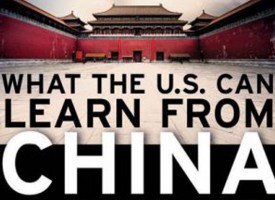
What the U.S. Can Learn from China, by Ann Lee - Book Review.
 |
| Media Photo |
China is nonetheless still an emerging market country, and a source of cheap labour where people are flocking to the cities and where agriculture, the heart of the Cultural Revolution some time ago, has given way to other business activities. Ms. Lee notes the dictates of the grossly - indebted western powers to the emerging markets have mostly been destructive due to things like an Oriental high regard for education and its emphasis on Confucian thought. The western powers themselves apparently have financial troubles at this point due to immoral business practices, wealth inequalities, and inappropriate emphasis away from things like proper education / pedagogy and fair pay for a day's work. There are no guarantees in the world of democracy, but America has a long - standing waning of people participating in democracy itself through exercising their right to vote, and a waning itself of values on education and equalities. The U.S., apparently to Ms. Lee with respect to China is more like a plutocracy and / or an Alice in Wonderland.
As a response to the lack of success of the Cultural Revolution, the leadership in China has classically re - interpreted its lessons to place its legacy today on uniting the party to serve the Chinese people. This has the effect of making Chinese leaders more proactive and a view in the Orient of democracy as a tainted system at present. "Capitalism with Chinese Characteristics" in this text is a form of that system as helped by the state in calling for labour's drive to succeed and watching over the state and the enterprise, where decisions are centrally controlled and the people have a comprehensive business strategy including central planning. The closest thing to the Five - year Plan in China in the U.S. is apparently named as the federal budget process, and this process apparently suffers from, as do some other areas of the U.S. economy according to Ms. Lee, "short - termism," or myopia - the hedge funds that ballooned during the 2000's and then later had difficulties staying afloat are used to illustrate this.
Operating a business in the P.R.C. is referred to in the text as "Swimming with the Sharks," given the overall enormous success of the innovative enterprise zones and state - owned enterprises, that she incidentally suggests might be a good recipe for the U.S. Other difficulties are suggested concerning the American economy, including the manipulative villains who run some financial centers, lobbies and so forth. The commercial approach of China to Africa and Latin America is discussed as a successful "win - win" model of business development. In this narrative, only Israel, U.K. and Canada are supposed to be friends with the U.S., not too rosy a picture. The U.S. on the other hand is supposed to have excellent societal traits such as its sales people, a strong dollar, evident public cynicism, and the glamour of the media. Ms. Lee suggests goals currently being pursued in P.R.C. in the area of macroeconomics including eradicating hunger, increasing the wages of the working class, and avoiding tragedies such as that currently in the Sudan. She calls upon the growth models as preached by Soros, Rogoff, Summers, and Zoellick; including the consideration of a single global currency, and more effective use of S.D.R.'s. She also acknowledges China's sketchy human rights record and Nobel Prize winner Liu Xiao bo, ominous military developments in both the U.S. and China, and other politics of ascendancy. The text goes on to caution the reader about stagnation in China despite a bright and just future.
Wednesday, April 11, 2012
Why don't you just stick to "Turandot," the food and drink, and so on?
 |
| Media Photo |
It might be possible, and this without professing a moral higher ground, with regard to the P.R.C.'s current market power and growing military and public financial interests and insinuations, to appreciate the culture of P.R.C. (not T'ai wan) as having led up to this for a long time, even from before pre - revolutionary days. One comparison one might make between mainland China of old and today starts with the T'ai pings who can be likened to communist conservatives who showed a kind of Christianism in their belief system, however distorted that vision of Christ was. The Chinese communists of today with their apparent assimilation of western methods and commercial ideas and practices appear as somewhat palatable followers of western methods, and agnostic at the most (again seemingly) with respect to their attitudes about western people that actually range from extreme xenophobia to ordinary Orientalism. This is similar to the use of western ideas used by the T'ai pings to try to take over the country during the mid - 1800's, provoking a bloody civil war that threw a good part of the provinces and Bei jing back politically and commercially quite a ways, given the status of Hong Kong, Shang hai and other places, including the capitol after the civil war there had ended.
 |
| Media Photo |
Sunday, March 25, 2012


... another book review (click here.)
 |
| Media Photo |
The text examines anew the development of the hydrogen bomb in a way any reader can comprehend and largely avoids political considerations, but does illustrate the importantly damaging spying the soviets did on the U.S. nuclear program. It is in all respects a moral triumph and a practical one that Teller's hydrogen bomb was never used, but that it has carried much weight as a talisman of superiority for the U.S., and rightly so, in any talks about arms that took place between the Americans and U.S.S.R. / R.F. up to this day. For another review, click here.
Sunday, March 11, 2012
L'anti - anti mémoire

 |
| Media Photo |
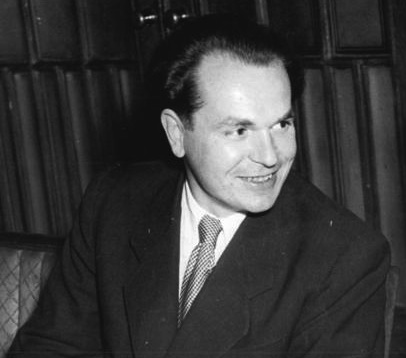
Une Rencontre - Milan Kundera.
Ce livre de Milan Kundera, un auteur aussi lettré que tous les auteurs dans la littérature d'aujourd - hui, même plus, exprime pour la plupart les rencontres envers les anées de Kundera et ses amis intellectuels; ceux - ci étant de tous les coins du monde et de tous les formations et influences. Aussi pour la plupart ils étaient des hommes influents dans l'art et la littérature, quelques d'entre eux fûrent ses aiëux intellectuels, et la majorité encore étaient vivants au moment où Kundera les aient connus. Au cours de ce mémoire en forme de roman, on aurait tenu séance avec Francis Bacon, Samuel Beckett, Picasso, Bergsson, Valéry, Dostoïevsky, Céline, Biensczyk (un autre influent Tchèque,) Anatole France, Rabelais, Beethoven, Carlos Fuentes, Xenakis, Bréton, Césaire (du Haïti,) Vera Linhartova, Oscar Milosz, Ernest Breleur, Janacek, Schöenberg, et Max Brod, Philip Roth, et Malaparte, parmi d'autres romanciers, ecrivains, artistes, exilés, musiciens et encore des grands personnages du présent et d'antan.
Les thèmes sur l'écran de ce texte mettent un appui sur l'art abstrait, quoqu'il soit le genre, critique, existentiel, romantique, réaliste, et encore, abstrait; tous intégrés à l'histoire de ce mémoire intégral qui rappelle au lecteur les réalités et les rêveries, la mémoire et les oublis de ces personnalités Tchèques, Allemands, Français, Canadiens, Anglais, Russes, et autres localités ayant fit face aux non - conformistes et legs des radicaux de Mai 1968 et ses conséquences: Ceci étant le thème sur tous les idées courantes de ce texte - et les évènements à Prague, Paris, et partout. Beaucoup de ce texte fut consacré a la mortalité de ces personnages au moment de leurs vies et la conduite de leurs vies et responsabilités en connaissance des effets de la guerre, surtout celles de la deuxième guerre et la guerre froide. La vie illustrée et les funérailles d'Anatole France ont mis en relief les détails saisissants des histoires des personnes faisant partie et soutenues lors ces paragraphes rappellant des oublis et écrits sur les exilés, les listes noires, les condamnés resortissants de l'Europe de l'Est et ailleurs en Amérique et au Canada. L'histoire illustrait également à côté des émigrés les amis de Kundera qui ont resté avec l'idée à l'esprit que les exilés dans leurs propres pays et régions n'y revenaient pas dès la fin du communisme. Les raisons pour avoir évité une piste de retour dans leur pays après la fin de la guerre froide, sont laissées au lecteur, mais l'exemple de, et perceptions sur la vie de Malaparte nous donnent des aperçus nous - mêmes sur le sujet de l'exode à partir des pays de l'Europe de l'Est et autres ou l'on trouvâsse il y a une fois des communismes. Dans le texte, autant de détails mettent en relief ces idées sans leur discuter directement en relief et aussi entre les lignes. Ce texte, sommaire de "rencontre" entre lecteur et auteur et ses personnages, soit donc un volume pour la lecture et de nouveau pour la re - lecture.
THS
Monday, February 20, 2012
Glenn: February 20, 1962
... and his precursor, Alan Shephard (May 5, 1961.) Please pardon the links, and no matter your expertise, do NOT do this at home.
Sunday, February 12, 2012
Anita Hill (speaks again.)

 |
| Media Photo |
Ms. Hill was originally put under the national spotlight during the Justice Thomas confirmation hearings. While Justice Thomas has proven to be in the public eye quite a good justice, Ms. Hill has chosen to have a profile that is less public than she might otherwise have while taking academic jobs in U.S. Eastern schools. I listened to a replay in California today of her recent public interview meeting with Robert Reich of the University of California and author of many books and articles geared to readers in the business world. Ms. Hill has many revolutionary ideas despite her apparently more moderate background, training, and education. She expressed in the interview, among other points, her ideas about equality and gender, and other rights issues with a kind of "go out and get it" philosophy. One should try to listen to these types of interviews as they give a perspective on the wisdom of our system in giving everyone a voice after some ups and downs, again for everybody. Ms. Hill and Justice Thomas, in the view of people like me, were some time ago locked into a vicious mutual antagonism probably due the mistakes and missteps of other people around them who were climbing a career ladder, arrivistes, yahoos, and so forth. That the Thomas hearings were as they were created issues for everyone in the related communities that make one want to question the morality of public hearings and the power of same to wreak havoc, probably just due to public curiosity and the need for a story, in the lives of those attending to them.
Sunday, February 5, 2012
... as if (a twenty - foot tall) Lenin - Book Review.
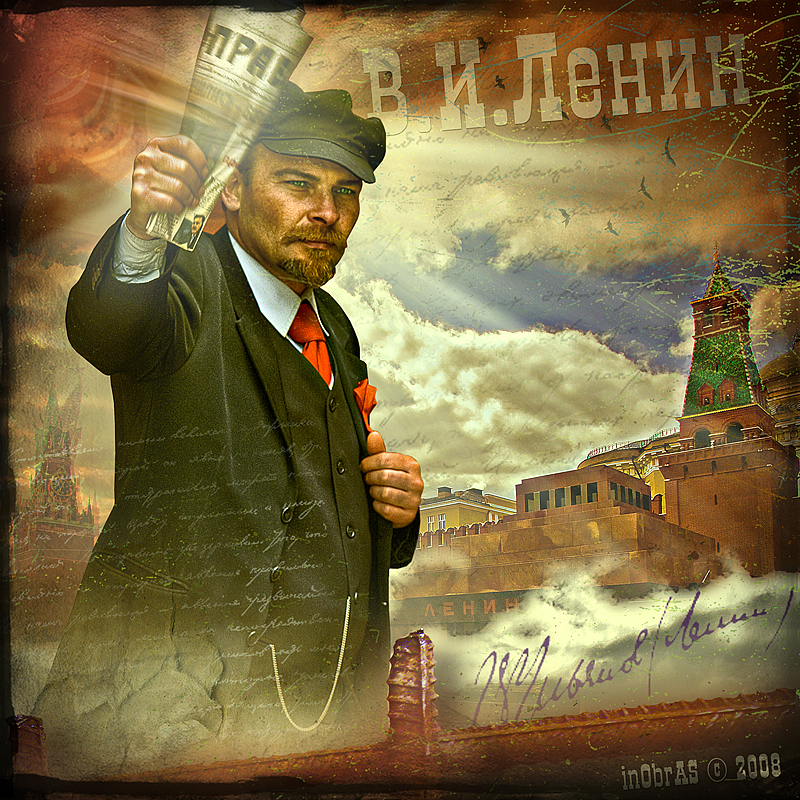
On Conspirator (Rappaport, Basic Books, 2010.)
There are many good books, including this one, published about Vladimir Ilyich Ulyanov (Lenin,) and his spouse who survived him by years (Nadezhda Konstantinova Krupskaya,) though most of them examine his entire life starting with childhood through his passing in after the Russian Civil War. This text by Helen Rappaport gives a portraiture of only his pre - revolutionary resume as a brother of Aleksandr who conspired against the Tsar and was executed, up through his re - entering Russia as allowed by the Germans to pass through Switzerland and other territories. Almost in parallel with the death of Aleksandr was Lenin's time as a student at university in Kazan and where he was involved in student demonstrations that got him expelled from law school. The deaths of Aleksandr, his father and sister, all happening within a short time of each other, and with his exodus from university, Lenin started to travel abroad. It is important to note the text illustrates prominently his provincial location within old Russia at this point (1888 or so) and his life of intrigue and growing influence that began in rural Russia, his ideas about travel abroad and its educational qualities, his meetings with Swiss communists, and other pursuits including his study of Karl Marx in exile that captivated generations of Russians. Saint Petersburg was a likely hotbed of leftist ideas against the Romanovs, not only due to the location of the opportunistic opposition within Russia, but the town was quite easily reachable in Russia from most European capitols. Of these, and outside his time in Siberia, Lenin resided or visited virtually all the important ones, especially Prague, London, Paris, Berlin, Geneva, Krakow, Brussels, and of these, he naturally liked Geneva where the communists abroad were led at the time by Georgi Plekhanov, another name to remember.
Lenin's greatest achievement apart from the leader of the worldwide communist movement, in life and in his passing, was the overall successful publication of underground literature, including the newspaper Iskra, or "The Spark," which made the authorities of the time very wary as the Okhrana deliberately intercepted this publication in the mails several times. Lenin worked feverishly on all publishing projects, much like some people work feverishly on the same sorts of material today. He might have lived longer had he been more patient with himself, though no one like me really shares that opinion. The drama of this time that Ms. Rappaport illustrates very well is the political gamesmanship of the communists as led by Lenin abroad and then at home that concentrated on literary propaganda, spying, organised criminal activities, and other communist party actions of the day that resulted in the ouster of the Tsar and his family, popular dissension against the Russian royals, and the vengeance against them that resulted in their deaths after a new government had come to power. Not all of this is examined comprehensively, nor is the actual importance of the war in revolutionary times; and the book ends with the story of the Lenin train leaving from Switzerland with its destination as the Russian capitol, a trip that took place within the sinister framework of the conquered German territory at the time. This book seemed important to me as it illustrated the frenetic character of the communist leadership in pre - revolutionary days, the overall purpose of communism on a multi - national scale as a foundation for political success, and as a movement affected by and perhaps determinative of the chaos in Eastern Europe early in the 20th century.
THS
Subscribe to:
Posts (Atom)