Showing posts with label 2009. Show all posts

Sunday, March 11, 2012

L'anti - anti mémoire


Media Photo

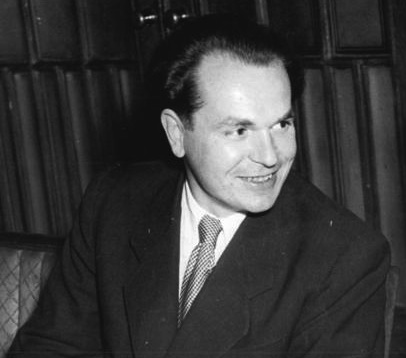
Une Rencontre - Milan Kundera.

Ce livre de Milan Kundera, un auteur aussi lettré que tous les auteurs dans la littérature d'aujourd - hui, même plus, exprime pour la plupart les rencontres envers les anées de Kundera et ses amis intellectuels; ceux - ci étant de tous les coins du monde et de tous les formations et influences.  Aussi pour la plupart ils étaient des hommes influents dans l'art et la littérature, quelques d'entre eux fûrent ses aiëux intellectuels, et la majorité encore étaient vivants au moment où Kundera les aient connus.  Au cours de ce mémoire en forme de roman, on aurait tenu séance avec Francis Bacon, Samuel Beckett, Picasso, Bergsson, Valéry, Dostoïevsky, Céline, Biensczyk (un autre influent Tchèque,) Anatole France, Rabelais, Beethoven, Carlos Fuentes, Xenakis, Bréton, Césaire (du Haïti,) Vera Linhartova, Oscar Milosz, Ernest Breleur, Janacek, Schöenberg, et Max Brod, Philip Roth, et Malaparte, parmi d'autres romanciers, ecrivains, artistes, exilés, musiciens et encore des grands personnages du présent et d'antan. 
Les thèmes sur l'écran de ce texte mettent un appui sur l'art abstrait, quoqu'il soit le genre, critique, existentiel, romantique, réaliste, et encore, abstrait; tous intégrés à l'histoire de ce mémoire intégral qui rappelle au lecteur les réalités et les rêveries, la mémoire et les oublis de ces personnalités Tchèques, Allemands, Français, Canadiens, Anglais, Russes, et autres localités ayant fit face aux non - conformistes et legs des radicaux de Mai 1968 et ses conséquences:  Ceci étant le thème sur tous les idées courantes de ce texte - et les évènements à Prague, Paris, et partout.  Beaucoup de ce texte fut consacré a la mortalité de ces personnages au moment de leurs vies et la conduite de leurs vies et responsabilités en connaissance des effets de la guerre, surtout celles de la deuxième guerre et la guerre froide.  La vie illustrée et les funérailles d'Anatole France ont mis en relief les détails saisissants des histoires des personnes faisant partie et soutenues lors ces paragraphes rappellant des oublis et écrits sur les exilés, les listes noires, les condamnés resortissants de l'Europe de l'Est et ailleurs en Amérique et au Canada.  L'histoire illustrait également à côté des émigrés les amis de Kundera qui ont resté avec l'idée à l'esprit que les exilés dans leurs propres pays et régions n'y revenaient pas dès la fin du communisme.  Les raisons pour avoir évité une piste de retour dans leur pays après la fin de la guerre froide, sont laissées au lecteur, mais l'exemple de, et perceptions sur la vie de Malaparte nous donnent des aperçus nous - mêmes sur le sujet de l'exode à partir des pays de l'Europe de l'Est et autres ou l'on trouvâsse il y a une fois des communismes.  Dans le texte, autant de détails mettent en relief ces idées sans leur discuter directement en relief et aussi entre les lignes.  Ce texte, sommaire de "rencontre" entre lecteur et auteur et ses personnages, soit donc un volume pour la lecture et de nouveau pour la re - lecture.

THS

Tuesday, July 27, 2010

Some comments are that "It Could Be Worse." - 2009 New York Times Magazine

Also - Click President Signing Unemployement Act - 2010 as well for more ...

The above link is a 2009 interview site where the U.S. president sat down with a magazine editor and went over some items not only affecting our country, but other administrations as well that look to the O'Bama administration as an example, especially those in the western hemisphere.  This is the first I had heard that the president's mom had a cancer attack, then she apparently had stroke and upon that fell and broke her hip.  This would be a sorrowful thing for anyone, and this happened during the presidential campaign which must have been doubly disconcerting for the to - be president - elect and it shows his leadership skills to be able to speak about this openly, and to talk about it within the overall framework of medical care in the U.S.

It seems to me that with respect to this article that someone make a determination as I have that public finance began the financial crisis and (through Fannie and Freddie, and maybe even other entities of the same nature) with their collapse led to further problems that eventually touched upon the private sector and snowballed further.  The president in his interview appears not to know this and despite the conversation, the interviewer appears lost on it as well, even despite some discussion of the now passing financial rules in Congress and the Volcker - influenced regulations relating to macroeconomic financial safety and soundness.  Here also seems to be some cloudiness on the subject of the role of the U.S. Treasury now that the scandals have been remedied and how the moneys that funded the failures are to be repaid.  There is, however, some discussion of the technology and other crucial sectors driving paper profits and these parts of commerce, at least in the future, according to the interview, will not have the same primary role as revenue and income drivers in the economy as they did before. 

The interview includes a discussion of the president's overall views on the economy and his perceptions about workers and their choices and goals, for example, of the workforce toward greater vocational fulfilment, greater employment, and better lives for workers.  There is a surprising omission of any discussion of the basic relationships between the means of production and labor in the talk illustrated in this article, and in fact it appears that the president has decided, maybe accurately, the economy of the U.S. must at this point, and for very healthy reasons, become at least in part a labor economy among others.  By this he must believe in anti - inflationary measures and the general provisions of labor economics with the all encompassing statistics they have and so forth.  There was a significant discussion on the subject of health care and this article notes that ninety percent of health care costs are attributed to chronically ill patients in clinics and hospitals - and with this in mind, what one can do with health care costs - with the emphasis on the cost structure of delivering health care when the fixed costs are so high.  One back - of - the - envelope solution has been to "socialize" health care, but given the structure of insurance and other vehicles that cover health care in the U.S. and they way they have been for years, it does appear, for further discussion yet, that health care is already socialized.  This lawyer - president appears to want to depend upon quantitative methods for his executive powers and their implementation, and it is in any event very interesting to have read through this year - old magazine piece from May 2009 to find many of the same issues as looked -at still up - to - date.