Showing posts with label 2011. Show all posts

Sunday, March 25, 2012

... another book review (click here.)

Media Photo
In Judging Edward Teller, by Istvan Hargittai, another Hungarian from a subsequent generation who met Teller, the story of the life of this prominent nuclear engineer / scientist is told from start to finish using an excellent narrative style and attention to the details of Teller's life that keep the pages turning.  The story begins with the birth of Teller in Hungary on January 15, 1908, his early life and early scientific training in Hungary.  Then his continued training in Germany and later, study in American academia, and of course his role in the development of nuclear weapons.  Teller is associated with four other Hungarian scientists of his age who made outstanding contributions to their own fields - Leo Szilard, Theodore Von Karman, John Von Neuman, and Eugene Wigner [and Edward Teller.]  All the people Teller knew were international people and his story as developmental of a great mind is compelling and is told substantively while evading overriding but salient topics such as the nazification of Central Europe during his youth, the bitter battles of World Wars I and II, and other conflicts that obviously battered European society and caused many to emigrate outside the continent permanently after WWI, for example.  That this story leaves out people like Andrew Grove of Intel, another of Teller's young colleagues is a kind of snub, unless these people were indeed very unaware of each other which is unlikely.

The text examines anew the development of the hydrogen bomb in a way any reader can comprehend and largely avoids political considerations, but does illustrate the importantly damaging spying the soviets did on the U.S. nuclear program.  It is in all respects a moral triumph and a practical one that Teller's hydrogen bomb was never used, but that it has carried much weight as a talisman of superiority for the U.S., and rightly so, in any talks about arms that took place between the Americans and U.S.S.R. / R.F. up to this day.  For another review, click here.

Sunday, February 12, 2012

Anita Hill (speaks again.)

Media Photo


Ms. Hill was originally put under the national spotlight during the Justice Thomas confirmation hearings.  While Justice Thomas has proven to be in the public eye quite a good justice, Ms. Hill has chosen to have a profile that is less public than she might otherwise have while taking academic jobs in U.S. Eastern schools.  I listened to a replay in California today of her recent public interview meeting with Robert Reich of the University of California and author of many books and articles geared to readers in the business world.  Ms. Hill has many revolutionary ideas despite her apparently more moderate background, training, and education.  She expressed in the interview, among other points, her ideas about equality and gender, and other rights issues with a kind of  "go out and get it" philosophy.  One should try to listen to these types of interviews as they give a perspective on the wisdom of our system in giving everyone a voice after some ups and downs, again for everybody.  Ms. Hill and Justice Thomas, in the view of people like me, were some time ago locked into a vicious mutual antagonism probably due the mistakes and missteps of other people around them who were climbing a career ladder, arrivistes, yahoos, and so forth.  That the Thomas hearings were as they were created issues for everyone in the related communities that make one want to question the morality of public hearings and the power of same to wreak havoc, probably just due to public curiosity and the need for a story, in the lives of those attending to them.  

Friday, December 30, 2011

Perhaps not indefensible monetary policy, and the results of much hard work.

Media Photo
The "Operation Twist" policy of the U.S. Federal Reserve at this point might just be a palliative against the greater problems presented by long - term deficits and the Great Recession overall, but it surely might serve as an example about what to do for future remedies to U.S. economics issues in the future:  Decreasing long - term yields of Treasury bonds reduces and / or manages the idea of inflationary influences, including expectations on the future business and commercial climate of the U.S. nationally and with respect to the overall impact of U.S. business on the world economy.  Not only does the dampening of long - term yields reduce the influence of inflation, which might or might not lessen itself due to this policy, but the expectations about future bond yields can have an effect on asset prices, national business growth and its parameters, and things like future hiring and productivity among other vital indicators and elements of the economy.
How did the Federal Reserve come up with such an idea?  It has in fact probably carrying out this "Twist" policy for years without the economic and statistical precision the Fed is using at this point as a fine - tuning measure to monetary policy.  The recent actions as carried out by the "Twist" might also have a desired effect on the value of the dollar, lending more stability to this currency while others continue to claw and scrape away at it (Renminbi, Euro, Yen, and even the peso.)  The current monetary policy designed to do a number of things to ameliorate economic conditions for all Americans shows the imaginative qualities of the Fed Chairman, Ben Bernanke and his chief economists and staff, in that it relieves somewhat the short - term stresses on the national economy in many areas, especially with respect to growth prospects and industrial operations as linked to economic indicators.  That does not go to say health care, retail, construction, insurance and securities, aerospace, and other sectors are ignored in the Fed's current efforts to foster growth; these industries are relatively autonomous and do well depending upon overall and other business conditions.  What this does mean is America might not fall into the same economic projects that other developed economies did in past years, chiefly during the 1980's and 1990's, where attempts at growth overall, again, were financed, and this led to other difficulties when business conditions did not improve.  Investors and market makers now have choices as to the way to steer their economic concerns with more precision, and this might allow the U.S. economy to begin emerging again from the slack it has experienced of late. 
THS

Tuesday, December 27, 2011

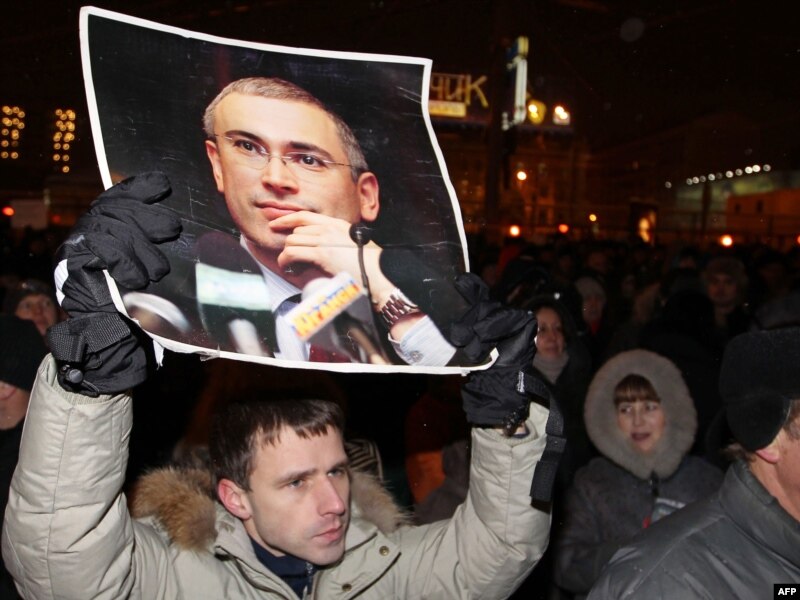
Definitely Not "Professional" Protestors - An Authentic Impression


Media Photo

The nature of the protests in Moscow at this point, and in the foreign capitols is impressive as many Russians are seen to be apolitical, and however reluctantly, followers of the leaders of the current regime.  The reasons for this are that Russia itself does appear to still be dealing with breaking from its leftist orientation during the 1900's, and the current regime does promise better economic and business development for the country as a way of dealing with this.  These are just two simple reasons (promises) that allow for the populace to usher in the Putin regime in 2012.  That even small protests have taken place, and in cities abroad, indicates the overall scepticism of Russians about 'Team Putin,' as well as the renewed emphasis in government apparently on the military and security services.  The reaction of the crowds in Moscow and abroad are classic with respect to the apparent resented and reviled alchemy of the state to exercise dominion over its populace at home and abroad and its political promises among other things.

That there is question as to the legitimacy of results of recent elections gives rise to ordinary curiosity about related details and the methods of the various parties who benefited from the outcome of the elections.  Usually, even in political regimes that are quite large, there is some acquiescence as to official looking into the election problems, and then some certification of results either way.  The protests do not appear thus to have enough of an impact to warrant this, even to test the proposition of improprieties, and this is probably the result of the spontaneity of the gatherings and some lack of organisation and influence over the regime that ignores them apart from security issues.  It is unfortunate the crowds are pointing out the unfulfilled promises of the post - Soviet era, and it is as well unfortunate there appears to be no direction in Russia today along the lines of more liberal reforms:  The regime continues to favour a public emphasis on heavily profitable commercial activities, business influences as beholden to the state, and public policy, even confiscatory and intrusive as it can be, probably just as arbitrary as it was before the Yeltsin era.  All these points bring up more politics and some of these are points of contention that will never be resolved, and because, and again anew, the regime has found fertile and profitable ground in fixed ideas and a preoccupation with constitutional decisiveness and a strict rule of law, centrism, the regional power and even arbitrary edicts of Moscow and its workings over all of the country.

One is far from the dictature of the proletariat here, it does seem, and there is nonetheless a 'United Russia' party line that dispenses with the efforts at forming a government of consensus or some coalition of parties and interests without regard to efforts to further centralise rule and pre - determine regional politics as secondary to those in Moscow.  This is a kind of tradition in politics and administration in Russia and is important insofar as constitutional and other powers and rights of the people are concerned - especially insofar as it is allowed through public debate and resolution through the coming elections.

Monday, November 28, 2011

In Memoriam


Many people of American origin are aggrieved at the passing of Alekseev as well.  I do remember watching his Olympic competitions as a young person and the guy was a perfect combination of technique and muscle strength and a perfect example of the scientific approach to athletic training as entertained by soviet trainers at the time (1970's or so.)  The remarkable thing about his lifting was indeed the technique and he had the most deft clean, and probably dead lift as well, of many weightlifters at the time.
Alekseev, as I read about him, also raised things like strawberries at his dacha, and had a truly gentle image among Americans despite his athletic explosiveness that endeared him to people everywhere.  People such as the 1970's Russian and other Eastern Block athletes, as they became known in the West, showed a human side to the soviets, and at least in part were responsible for mood around 'glasnost' and so forth that came later.  They were Peacemakers inside the controlled and channeled forces that ruled Olympic and other international games at the time.  People like me, again, are very sorry he is gone, and I did not even know he was ill.  God bless you for this sympathetic and outstanding column on his life and legacy.  More people need to read about this.

Saturday, November 26, 2011

occupy what, where, how, why, when? (Click here for original post.)


There is some cognitive dissonance I seem to have when reading this material:  Since when does education connect directly with success in the food chain (or guaranteed success in anything)?  While I have always believed people are who they are, and those who pursue an education, particularly graduate programs have a different approach to life apart from "job, transport home, sleep," for instance.  They have their own reasons for going to college and so forth.

When I was a student, again for example, no one told me or anyone I know there were any guarantees in the modern world about winning in life through learning in the post - secondary establishment.  Most of the people I went to school with at college, even with advanced degrees are educated workers; they are not super - high - earners or educated intellectuals.  This is the case with most educational institutions, even the very good ones, I do believe.

There's no fallacy in the role of post - secondary educational schemes as we know them, no fraud, and thus is presented one of the major problems you bring up in your writing - no guarantees invites any excuse to politicize academic achievement and any and all lack of motivation to achieve intellectually, or to in fact learn what in some pursuits is vital material at the exclusion of 'diversifying' a learning experience at college and thereafter.  What's the point:  As far as I know, college at this time is really for most people not an experience of intellectualism and higher learning.  It is apparently when people find out if they have enough of "what it takes," or whether they have "got it," nowadays, regardless of what is gained on an intellectual level.  This is (subject to interpretation) an unfortunate circumstance, but has been prevalent for me as a trait in academic institutions since schools have openly been run as very large organisations and the people in them as simple elements thereof, and the related role of administration in student / faculty life has had an impact upon people's conduct that is in many cases detrimental to intellectual pursuits, too.

The above, among other issues, has been publicly examined by people like William Bennett [sic] who ran the federal education department for some time and who attempted to first make the public more aware of these difficulties and then try to effectuate some change in the role of education in our society.  His efforts by some were viewed as too difficult in their scope and scale and evaluated as even based upon backward ideas.  People like me do believe that the value of higher education, especially in the arts and sciences and related academic and professional achievements, has been adulterated by increasing dependence upon technology and computers (this is probably subject to interpretation as well.)  There are entire businesses devoted to selling methods and practices to reward incapable people due to non - academic considerations and other "success" factors.  Why is this, it's just that the educational practices de jure sometimes call for this.  You hit a real nerve here, and anything subjectively submitted here gives reasons for serious analysis of systemic failures in students' and later professionals' inability to learn or to demonstrate their higher learning.  Please pardon typographical errors here.

Sunday, November 20, 2011

How Is The Yuan Doing (even in China Proper)?


There is no specific identity that shows the Renminbi is undervalued, but there are signs of this, including that the economic leadership of that country, especially the central bank, has worked to keep GNP growth ahead of inflation.  That economically healthy countries do this is a sign of good business and serves as a powerful attraction for investment moneys, tourism, trade and internal commerce.  The last time, for instance, many of the older, established western countries enjoyed this type of commercial growth was long ago, and the effect was simply blamed on the idea that these countries had colonies, slaves, and so forth.  The fact is that western countries woke up to different issues about 100 or so years ago, and realized that economic statistics and figures, even unemployment statistics are of secondary importance to other socio - economic issues, like productivity, capital flows, the number of cars on the road, alcohol statistics, the problem with crime, and so forth.  P.R.C. in toto has not begun to deal with these issues on a public policy level, especially given the high rate of suicides among the populace, the place of women and children in that society, and so forth.

So what arithmetic or geometric identity will tell whether or not the P.R.C. currency is undervalued?  There isn't one, but there was some time ago, a similar problem with the Japanese Yen having a low value against the dollar (say during the 1960's - 70's.)  I have not checked the latest value of the Yen since it reached around 100 to the U.S. Dollar some time ago (another overvalued currency.)  The solution to the Yen value at the time was a transitional mechanism, much is like what the Chinese have agreed to at this point, but that mechanism is old and subject to subtrefuge as the Yen mechanism was.

One alternative to the current standard that measures the Renminbi instead of using the U.S. Dollar is to peg the Chinese currency to gold, but at that juncture the Chinese will try to buy all the gold they can with their Dollar reserves and that's not good, either.  Another alternative would be to slap the P.R.C. with trade sanctions until it allows its supported currency to float freely.  This would interfere with attempts by domestic Chinese policy makers to improve the lot of their people while they are in a position to do so.  The question is, do we as holders of U.S. Dollars and Dollar assets, care about our Chinese neighbors enough to want to let them build their country at significant expense to us.  This brings up an entire series of questions, including things like technology and human resources "transfers" to P.R.C. that are actually government and corporate gifts to satisfy unhappy people in their leadership (people like me some times use the term 'spoiled' to describe this sort of character.)  Further, in addition to the merchandise that is produced in China and that we spend so much money on, how can we quantify the disinvestment and 'brain drain,' and technology exports, some of them clandestine and carried out by cheaters in the system?  Policy - makers everywhere who hold U.S. Dollars can not quantify these and other factors that will contribute to a real valuation of the Renminbi.

People like me know that it is indeed difficult to revalue a currency that is sponsored or supported by major bank operations, and not just those of the Bank of China (and I mention this without reference to any specific, sovereign nation or financial institution,) and that same of a state - controlled, essentially non - market economy that has grown very large and powerful.  Without mentioning the nature of the dangers of non - market systems to capitalism and so forth, it is obvious that China produces many goods without respect to purchasing power parity and other factors within the country of China and maybe even within Asia as a region.  This is what is so dangerous, when the leadership of a sovereign nation represses things like needs and wants of its people, even major needs and wants such as happiness, freedoms, success and so forth; about command economies which P.R.C. in fact still is at this point.  The reasons why are complicated, especially the long - term consequences for trade and capital flows, but people like me again do believe this current course of events could provoke a crisis, and in order to avoid a crisis, P.R.C. should be called upon to re - value its domestic currency, and the order of business is that eventually the role of the state in business, if it is as China declares it to be - an agent to assure economic and investment success - will eventually become less conniving and of secondary importance to the real creation of value and wealth in P.R.C. itself.  There is by analysis in China today a kind of 'will - to - power' economically and politically in the world, and in other domains such as science and culture, and it is important to mention there is nothing that will assure the growth of any intrinsic value of that country apart from its historical role and reputation, even within Asia, given the machinations of its policy makers today and how that translates into an artificially low value for its trading currency.  Investment possibilities, in fact investment yields, and other measures of business success in other parts of the world and the history of same; and their continued success have made the Chinese kind of angry and envious at foreigners, and this despite some very meritorious things the Chinese people represent.

This said, the Renminbi is without question undervalued, but by how much?  The fact is, everyone, including the man in the street has their own ideas, but in fact people like me know China has used its debtor accounts and other accounts to influence purchasing power parity, interest rates, and investment yields everywhere it sells products, some of which are very good.  That this should stop is a question that the P.R.C. leadership sees as debatable, including the effect all this has had on its currency that is as much as 60 % undervalued given various factors, and maybe more.  Simple quantitative analysis of Dollar reserves, current account balances, capital flows, interest rates, and other numerous private information might yield a similar answer, but remember as well that psychological factors and other influences in the currency markets might call for a further devaluation of the Renminbi, and this remains to be seen.  Despite what any reader of this article might believe, what is written here is not specifically a response to U.S. international Dollar values are, because I do not know them at this point.  This writing is, however, a response to Chinese economics, apparently as developed in Shang hai years ago and then distributed everywhere (same, for instance, as the 'Hundred Flowers' under Mao, but with practices that have been more dominant and more successful despite questions about their legitimacy as have come out in arguments about currency values,) and on and on.  

Saturday, November 5, 2011

open letter to unesco

A L'UNESCO:
Chere Monsieur, Chère Madame:
Dès les actualités sur une réception par UNESCO de l'autorité palestinienne, je suis agacé, par exemple, par l'usage du français par les terroristes y présents en proférant des paroles sur une résistance contre l'agenda des Occidentaux présents.  En plus, la cause des palestiniens ne fait guère un appel qu'aux nations non - alignées à l'usage des bureaux UNESCO.  Ceci soit depuis longtemps connu, et aussi dont les actions anti - Européens des pays non - alignés, surtout eux à l'intention anti - Français, et d'auprès mon point de vue privé tout à fait contre les bons intentions politiques et administratives d'autres pays, les EE.UU. inclus. 
Au moment où j'étais à Paris pour mes études (années 1980,) et depuis, j'ai rencontré un nombre de palestiniens qui partagent l'attitude illégal à chercher des conflits contre l'Israél et par contre à promouvoir un dominance et influence arabes et de leur livre, le Quran, dans le monde.  Desormais l'époque de mes études en France, si je me rappelle bien, l'UNESCO ait été vandalisée (en attentat) au moins en partie par les palestiniens et fût fermée pour un temps.  Pourquoi donc cette admission aux bureaux de l'ONU?  Les idées à promouvoir (encore) et à réaliser ce "laisser - entrer" sont basées sure des principes trompeuses d'une métaphysique dépassée de la deuxième guerre mondiale contre la croyance hébraïque et le christianisme.  Etape par étape, la métaphysique de la lutte contre l'Israél et son peuple, au cours du XXème siècle, ait gagné une primauté sur la scène mondiale sur une grande échelle plus d'une seule fois, et au résultat d'un coût de millions de vies, de gaspillage et déstruction inouïes.  Qu'est - ce que nous demandons ici, à part d'une état d'esprit pareillement ciblé sur un raisonnement de la réussite des dégâts du siècle passé servant au prologue des conflits à venir.  Sinon des conflits, peut - être un résurgence des esprits et attitudes contre - touts ce que représentent l'Ouest et sa politique de base de la liberté, égalité, fraternité, et surtout contre les israéliens qui seraient réduits encore aux hôtes d'un pays quasi - Libanais. 
A cause en direct de ce processus, et ici donnée la France, pays Européen des réfugiés, on peut prévoir des situations telles que Sangatte, au nord du pays aux années 2000; et ceci pour des milliers de raisons, desquelles une pour chaque individu.  Au niveau personnel, je suis encore choqué par la manque et abandon du porte - parole Européen et Français sur le sujet de l'attitude encore militante des palestiniens, et l'ensemble des pays non - alignés contre une propre gestion et influence partagées par tous contre la violence et terrorisme y encaissées. 
Bien à vous,
THS 
Californie, EE.UU.

Wednesday, November 2, 2011

Occupy Walls Street ...

While again many Americans are voting with their feet and joining in a haranguing of the New York financial capitol as well as regional financial centers, any observer needs to know the reaction to what is publicized as a Wall Street cabal and conspiracy is nothing more than a routine response to a significant panic that could further worsen conditions for turning the economy around and creating new commercial and industrial value and innovation.  During the 1990's, when the individual investor became a securities market driver (see Death of the Banker, Chernow,) more and more emphasis has been placed on things like shareholder activism, capitalist agnosticism and throwing the baby out with the bath water when the subject of investment valuation is discussed.  SEC Chairman Levitt's speech entitled "The Numbers Game," from years ago, outlines the accounting and other practices some enterprises used to freshen their accounting data and reporting.  At the time it was given, the idea of more transparency had been cast by the wayside due to short - term profitability concerns of many companies as related to financial trading environments and equity share values.  Chairman Levitt's idea was to stop the shenanigans accounting - wise and get back to some fundamentals in the mission of corporate finance such as assuring continuity of business(es) under the corporate umbrella and doing away with some questionable accounting tactics in addition to making the statements of dismal businesses representationally faithful so that something could be done about their related financial condition, even by regulators and overseeing authorities. 
On a national radio programme yesterday, I did listen to an interpretation of the above with respect to what is now called (by O.W.S. personalities) a "sell out" of the individual investor, or small guy in a conspiracy among the members of the banking establishment.  Blaming the established banking institutions and regulators, officials and law makers does not examine the scope of what people believed they were doing when money was "easy," and the only worry people really had, very many people in America, was their tax burden.  These individual investors, and investors in various pension vehicles and other investments must not have fathomed (in fact, had not read the small print) about risks, particularly market risk, in implementing what turned out to be faulty asset allocations strategies, overleveraged investments and for what were for some a number of pyramid and ponzi schemes.  Despite the evident market risk and other, more specific risks having to do with the types of investments some purchased or constructed, individual investors decided to demand more abnormal returns (those that are, simply, above average returns,) in a kind of herd that included millions of people who apparently, again, understood the benefits of market increases, but not the risk of what might happen if the market were to fall and the resulting risks of loss (and other things at stake, such as their mortgage, credit worthiness, and the like.)  If there was one inkling in the minds of these millions of individual investors of the downside of any of the funds or assets they put at risk, it was the "government" would take responsibility for their losses through its various humongous financial departments such as the SIPC and FDIC, NASD (quasi - bureaucratic) and so forth.
Individuals are angry because they know they have been reckless and are not due anything from anyone for their losses - this is the remorseful thing, actually - and that is there were some crooks such as the Enron people, Madoff and his people, and the rogue and insider traders (Gupta and Rajaratnam) of late who have scandalised many, honest and hard - working bankers and other financial parties to the establishment.  It does seem nonetheless the marches are a reaction to an unheard demand that someone individually take responsibility for investor losses, acknowledge the whole thing has been a mistake, and pay everyone back.  Nothing like this has ever happened about a panic even as serious as the one at this time, and certainly not after the most famous 1929 crash, nor the 1987 panic.  The marches and O.W.S. demonstrations indicate a kind of hysterics and anti - everything attitude and fervor and ensure an attack on the integrity of the financial system, and investors' rights before those who administrate their accounts.  The entire O.W.S. movement could in fact result in investors rights and activism becoming more restricted, curtailed and cordoned as the result of the current national pandemonium organised by what appears to be professional protesters and demonstrators.  There is an answer to the logical bottom - line question if it is, probably as it should be, away from "what happened," and more like "Where did the investment (premiums) go?"  The funds that went into the market at high valuations, including the real estate markets, for assets that were purchased, constructed, devised, etc., even in speculating in those assets have been devalued themselves, some money has been spent, invested and even speculated again; some has been expatriated, and some is still there.  There are many permutations to this as well about where the money went, and when huge losses are incurred by anyone, everything just gets wrapped up on the balance sheets of some large corporate entity, one or more.  The annoying and more serious things are that people are now teetering financially and are harried by life's expenses and the system has no resolution for that at the moment, and despite the blaming behaviour of the O.W.S. movement that has really only distracted and annoyed the people, parties and bureaus capable of resolving the problems of the crisis are immovable as more difficulties are presented in once depressing, once again optimistic news. 

Saturday, October 22, 2011

another leading role for europe.

Please pardon the brevity of this entry if things like weapons proliferation and global warming, etc., and other salient issues of the day are cause for greater discusssion - you can always leave comments of any length upon reading through this short editorial... .  Anyone knows, that is anyone who listens to news or reads the paper, has access to information where the European Union is calling upon Germany to pivot on the resolution of the Greek and other economic crises there, inasmuch as the German people have more economic and financial clout today (in this world of crisis) than they have had in some time. 
There are some reasons for this, not to assert any inappropriate traits in the German people, but, for example, that German reunification for Europe was probably the greatest and most beneficial event for all of Europe in a long, long time.  This happening and its ramifications created considerable value for the European continent, and inasmuch as many people in Europe at this point believe they contributed to this, they now wish to harvest what they believe they have sown.  There are reasons to believe, other than the assertions of those with a present will to power, that Berlin stood desparately on her own against the communists for a long time, and the current fiscal and monetary well - being of the German economy is due in fact to this unique, separate, and enteprise - oriented resourcefulness as represented by Berlin (possibly one day in the future the new "capitol" of Europe, cultural and otherwise.)  That Berliners and those in other parts of Germany, and this is an oversimplification of course, have resolved the vicious political syndromes of the Cold War, and have for the long - term worked to assure the continuity of their own society, and this in a world of political and economic integration, illicits no rationale calling for Germans to bankroll the European crises at this point.  There are precedents for this, of political and administrative self - interest trumping overall European interests in the past, and same for officials at the time within their regions and territories, voicing attitudes against turning their national treasuries upside down to compensate the profligacy of the day.  Discuss.

Thursday, October 13, 2011

ATP Tour

The "La Liga," Fussball Bund, nor the Premier Leage is it, but tennis in this tour can be fun to spectate and the television coverage is good, too. 

Saturday, October 1, 2011

in the pursuit of software "heaven," and other adventures ...

If the beginning of a very large software company can be encapsulated in a reasonably lengthy book, Mr. Allen has done it.  While it is obvious Mr. Allen is a great story - teller, and quite self - effacing with respect to himself in this text, it does somewhat appear his writing style is similar to that of Bill Gates' from other texts (you name the titles.)  Despite this likeness of writing style, Mr. Allen takes the approach in his text that technical software knowledge and related business are what made Microsoft the company it is today instead of the way Mr. Gates portrays Microsoft as being pulled together and as having executives who were artful deal - makers, much as other small computer companies have been in the beginning since anyone can remember. 
Most notable in the early - going of the plot of this text are Messrs. Allen and Gates as gifted school mates and their friendship that carried through to the college years when they made their plans for a business together.  Both apparently were skilled programmers and knew as well about computer hardware in the day.  Mr. Allen describes several seminal events in the growth of Microsoft as having depended upon engineers and other people in the provinces, including in locations like Albuquerque, New Mexico and various places in Washington state.  Not only were Mr. Allen's stories about New Mexico interesting to read about, but as well were the arrangements Microsoft made early on with NCR and DEC - two viable computer companies at the time in a fiercely competitive market.  That Microsoft had some practice before licensing its software for the P.C. in 1981 was due to these types of arrangements in the world of (competitive) hardware at that time. 
People like Messrs. Allen and Gates became extremely well - known about the time people like me graduated from high - school studies, and at the time, due to computers and the increasing dominance of technology, more and more students dropped traditional studies to attend technology institutes and schools (probably chiefly as the result of the images of executives from Microsoft, and Apple, Sun and some other companies.)  Around this, the dissemination of the invention of the GUI was extremely important for the computer world and made computing "easy" enough for most people to try to have a personal computer or computers.  Mr. Allen also speaks in his text about Moore's Law, which originally proposed the speed of processors would double about every year; and then was changed to every two years - this brings to mind how memorably slow the old 4k and up computers were, and how many of them had their own systems, the fragmentation of operating systems and so forth, that made computers talking to each other very difficult.  The adventure that Microsoft represented at this point was to standardize personal computer software, and later networking software, etc., and other applications in order that everyone from technical people and administrators to end - users could start talking the same tech. - language, regardless of the basis for the operating systems and applications, routines and so on. 
Mr. Allen is unabashed in speaking about his personal life and belief system as integrated into things like modern computing, quantum physics, microworlds, biology and futurology.  He also hints at why he purchased sports teams and their venues, and is still in that business.  Mostly people like me know he wants to bring an industrial - strength message to anyone who hears about Microsoft that technology is imperfect, but it is a great equalizer, a great way to improve productivity, educate people, and allow many tech. - oriented people to have better lives.  It appears the intention of the founders of his computer company had this in mind even when they began their adventures writing and trying to find the right code way back when. 

Wednesday, August 31, 2011

Economic "Karate" Test - Did I Pass?


Some people might mention the Vice - President's voyage in P.R.C. is the result of efforts to clean up a real mess, or at least to do some "dusting off" of issues.  Such trips as admininstrative and economic outreach only serve to outline the economic connivances of some of our eastern trading partners, not to mention the politics of it.