Showing posts with label germany. Show all posts

Friday, July 18, 2014

2014 FIFA World Result.

My unofficial attentive viewing of the recent World Cup final featuring Germany and Argentina began in the 30th minute with the offside Argentinian goal (Argentina was offside at several crucial times at the final) at the Rio de Janeiro Maracana stadium venue.  At the 35th minute, Cristoph Kramer (23) was off the pitch (substitution was Andre Schürrle (9)) with an apparent injury that followed some brutal play in which Germany’s Schweinsteiner (29th minute) received a yellow.  This brutal play against the Germans was again followed by a Howedes yellow, and in the 35th minute as well, Messi went for goal with his left.  Then in the 36th minute, Thomas Müller went for the Argentinian goal with his right.  At the 38th minute, it was Messi again on goal with a crucial German clearance out to the pitch’s right midfield from the German goal area.   At the 44th minute, it was again Müller on goal with his left.  In the 45th minute (approximately 45 :  20 and 45 : 40), Germany had corner kicks of which an outstanding header by Howedes (Kroos) that only found the middle of the right – hand post of the Argentinian frame; and the first half then ended even 0 – 0.
Media Image

The Argentinians then substituted Sergio Aguero (20) for Ezequiel Lavezzi (22), and within seconds were offside again in front of the German goal on the right.  At the end of the 46th minute, Messi made another left – footed attempt on the German goal, and the Germans replied in the 54th minute with a left – footed attempt again by Thomas Müller on the Argentinian goal.  This was followed by a decisive save / clearance by Neuer at the opposite end and in the 59th minute Germany had a header on goal (Klose), and again in the 61st minute, Özil of Germany made his goal attempt of the match followed by another in the 70th against the Argentines by Howedes.  In the 74th minute, Messi of the Argentines tried again against Neuer with his left; still no good for the Argentines.  In the 76th minute, the Argentines substituted Rodrigo Palacio (18) for Gonzalo Higuian (9).  Neuer made another decisive save in the 77th, followed in the opposite end by a clearance near the Argentine goal, and at the 81st minute, Kroos made another creative goal attempt of the match against the Argentines (right foot).  At the 85th minute, Argentina made their final substitute with Enzo Perez (8) out and Fernando Gago (5) in, and Germany at the 87th minute brought on Götze (19) in exchange for Miroslave Klose (11,) followed by a Götze right – footed attempt on the Argentine goal.  Regulation time ended at the 93rd minute on or about another German attempt on the opposing goal (Müller).  One interpretation indicates Argentina at this point were tired and increasingly shaky.
At the end of the first extra time, Argentina’s Palacio (18) was at the German goal again, and the first extra time ended at the 95th minute.  At the second extra time, and featuring throughout very physical play with a number of clashes marked a crucial serious foul called on Schweinsteiger (by Aguero), play could have gone either way save for the exhaustion of the Argentinians.  This was definitively marked by Thomas Müller’s receiving the ball on the left side within range of the Argentinian goal and making for the end line, beating his defender with a center to Götze who took the ball off his ribs, playing to his left and putting the ball in the air well by the Argentinian keeper :  At about the 112th minute, Germany 1 : Argentina 0.  The logic of the German defense from this time carried to the end of the match, even with a midfield foul on Messi toward the end (121st minute.)  Germany substituted Per Mertesacker (17) for Mesut Özil (8,) Messi’s free kick sailed, and extra time ended at or about the 125th minute with the final tally again at Germany 1 : Argentina 0. 

Please note the best accounts in English are from the UK papers, but USA Today had good coverage from the U.S., and there are numerous other sites with minute – by – minute coverage.  The network broadcast I viewed, and needless to mention this was a terrific match, featured a lag in the clock, so you might assume my times are entirely incorrect plus or minus maybe four minutes either way.  Also, as of today, July 18, the great German national team captain Philipp Lahm after ten years with his
Media Image
national team is retired from football.   

Tuesday, August 6, 2013

Smolensk, Russia (Yesterday.)

Media Photo
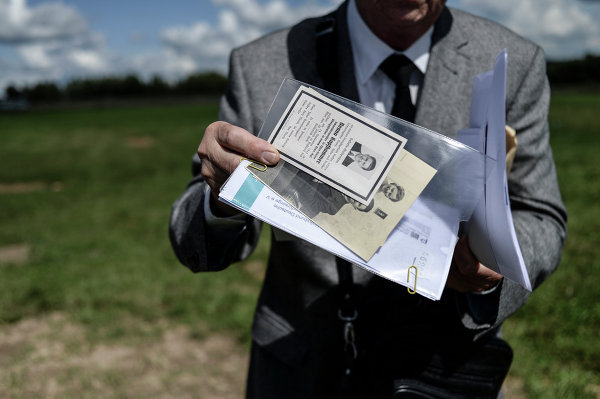
On a hiking trail in Northern California some time ago, I did meet while she herself was hiking for some exercise, a German lady with whom I began speaking about what wonderful things were happening in FRG - capitol moving to Berlin after reunification, economic reclamation and stabilization, etc., of the former communist areas and their influences, and the like.  In what she told me, in fact that this had been foreseen for years by the intelligentsia in Germany, and that the world had made that country wait in catching up to any relief of the memories from two world wars in addition to the role of Eastern Germany in the Cold War and more.  There was a topic that came up and inadvertently one of us mentioned the dismal conditions and privations of the Eastern Front in WWII and how many German boys had essentially gone through their training and then been cast into that abyss from which they did not return.  Many of them.  In fact, if my reading on the subject serves me correctly, assignment to the Eastern Front, even if one were a ranking officer was a death knell for many young Germans at the time.  See linked articles below.

In his "Lettre à un ami  allemand," the great critical thinker at the time, Albert Camus, opened the destructive and cataclysmic topic that is touched upon above as a question.  In fact, what was the mindset that drove the German soldier, in fact the man in the street in places like Munich and Bonn, and other places in Central Europe, to give power to the attitude that the only solution to communist and leftist influences in Europe, Jewish question aside, was conquest and subjugation.  This has been a topic examined, in the way the German military is understood to have worked and acted, as a kind of collective psychosis - "understanding" the German leadership a the time and so forth - though this does not, in fact it barely fills the vessel of knowledge and other facts and details to know and comprehend the enormity and importance of the European influence at the time and who had or has the most important role in it.  The question asked by Camus in his essay that is critical to anyone examining the topic of the WWII Eastern Front, and that might have application even today insofar as historical examination of the time is concerned, was in what way did the German leadership at the time not believe and thereby take up arms against the communists / Marxists in Eastern Europe, that there was no single, peaceful solution to letting that geographical area and its peoples continue what reportedly and observably had been and promised to be a mistaken experiment in politics, administration, social policy and ethics, etc., by many people worse in their edicts and totalitarian practices than any hitlerian model. 

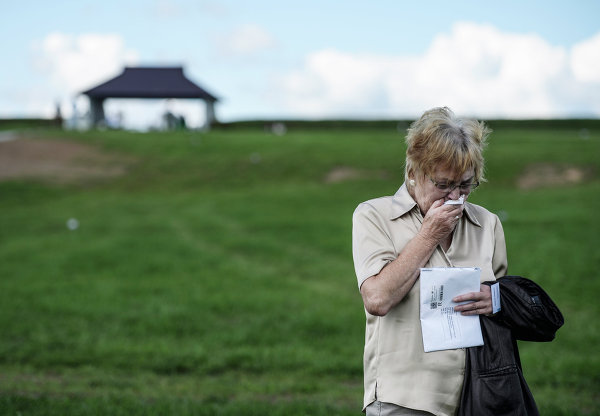
There is no doubt that many admirable communist military personnel from the U.S.S.R., themselves good and ethical people, brave and valiant, went West to fight the Germans and themselves and did not return - again the number of mortalities exceeds the ability of one person to count them, though on a different scale, the number of German deaths informs; and their work to respect, recuperate and put their dead to rest; the international community of the greater wounds suffered by FRG in Eastern Europe and that society's continued efforts to address the implications of the related military conflict in public discussion over the years.  In the overall examination of areas like the Eastern Front, in the thought of it all the way through to battle planning and execution on both sides, one "understands" the mystery about why the German leadership at the time placed such great emphasis, even political quackery, on what it believed to be the responsibilities of the time.  Though many observers of what happened in Eastern Europe in the 20th century, and scholars, etc., do look at how and why the way Germany addressed this as an entirety from a moral and psychological standpoint, and from the standpoint again that German leadership was deeply flawed, there are probably a set of more thoughtful reasons that are the answer to the unknowns provoked by moral, ethical and other issues and explanations about it.  Due to the overall interest in things like the Germans recovering their war dead, and how the soviets worked to discourage this, even to deface the idea of it because they at the same time gravely feared and loathed any respect German had nor has in the world; and the former soviets as well, there begins a process to answer the mystery and questions about the times in which Germans gave their lives in places like the Eastern Front.  This not because they did so willingly and with politically - charged ideas, but because and out of a sense of obligation, perhaps even overriding economic, social and  financial obligations as offered and predicted by the immediate future at the time.  The soviets were equally zealous and messianic, if not more so, and there were greatly more of them.

The soviet cemeteries that I have seen in Eastern Europe are quite plain with headstones and
monuments, and other markings of the past conflicts there and the related mortalities.  From the images of the new German cemeteries and the looks of them, the German ones are even more inauspicious and understated.  For at least some individuals, people need to continue to know what happened in places like Smolensk and related and similar places of the time, and not only the political and other ramifications of this, and of the value of respecting and recovering the human element that might one day be relegated or forgotten, and the meaning and responsibilities that go with this equally passing.  In view of what happened at the Eastern Front at the time, part of the sinister and criminal vice of the soviets, was to disallow and to deface and erase even the thought of Germans having any connection to communist soil.  That this has been redressed now shows at least at this time, and as the result of things like the effectiveness of Perestroika, renewed and popularly discussed and understood efforts of everyone to comprehend the places of Europe and Eastern Europe and their influences in the world in order to avoid the loss of life in the future that took place there.  Regrets for any typographical or stylistic errors in this writing.

"History" channel internet article.

Article from "Der Spiegel" online.

Online article from "RIA Novosti."

Saturday, October 22, 2011

another leading role for europe.

Please pardon the brevity of this entry if things like weapons proliferation and global warming, etc., and other salient issues of the day are cause for greater discusssion - you can always leave comments of any length upon reading through this short editorial... .  Anyone knows, that is anyone who listens to news or reads the paper, has access to information where the European Union is calling upon Germany to pivot on the resolution of the Greek and other economic crises there, inasmuch as the German people have more economic and financial clout today (in this world of crisis) than they have had in some time. 
There are some reasons for this, not to assert any inappropriate traits in the German people, but, for example, that German reunification for Europe was probably the greatest and most beneficial event for all of Europe in a long, long time.  This happening and its ramifications created considerable value for the European continent, and inasmuch as many people in Europe at this point believe they contributed to this, they now wish to harvest what they believe they have sown.  There are reasons to believe, other than the assertions of those with a present will to power, that Berlin stood desparately on her own against the communists for a long time, and the current fiscal and monetary well - being of the German economy is due in fact to this unique, separate, and enteprise - oriented resourcefulness as represented by Berlin (possibly one day in the future the new "capitol" of Europe, cultural and otherwise.)  That Berliners and those in other parts of Germany, and this is an oversimplification of course, have resolved the vicious political syndromes of the Cold War, and have for the long - term worked to assure the continuity of their own society, and this in a world of political and economic integration, illicits no rationale calling for Germans to bankroll the European crises at this point.  There are precedents for this, of political and administrative self - interest trumping overall European interests in the past, and same for officials at the time within their regions and territories, voicing attitudes against turning their national treasuries upside down to compensate the profligacy of the day.  Discuss.