Sunday, August 18, 2013

This Bloody Strife - "Let Me Tell You, ... ."

Media Photo

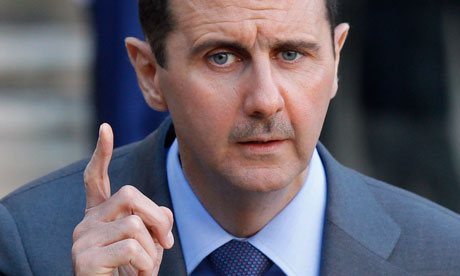
It is quite beyond this columnist why, apart from very odd political reasons of which a need for reasonable explanation, the unpopular and now widely covered bloody mess in Syria even continues at this point.  It is possible as indicated by the Russians declaring this mess to be their business as well, that the regime in Syria fears passing into history, either as the result of the current guerilla - rebel uprising or another explosive and elite revolt, as an effeminized system of government after the death of the elder Assad in Syria and the accession to power of the current Assad.  This fear is part and parcel of any conflict, armed or with simple verbal exchanges, in which attention is directed at Hezbollah as a participant and dates to the channeled and isolated violent ideas of the Abu Nidals of some years ago and the violent chaos they advocated in spirit and practice.  I do not know specifically the Arabic terms for "ready, aim, ... ," and like many reasonable persons have no interest in them, and the current Assad regime has incurred additional moral and other debts of a sinister character by inviting Hezbollah and its sponsors from the East into this unviewable and violent home fracas.  Even the network news coverage of the conflict is physically sickening, though also see press reports, of which:  Lebanese press, "Wall Street Journal", P.B.S. "News Hour", U.K. Economics Publication, U.S., Virginia newspaper, ... (there is an outstanding C.B.S. television report from August 17 on this topic as well):  All as perpetrated by those espousing in name, and tacitly and directly ignoring the culture and teachings of the prophets of Islam.
Media Photo
  While assuming the leaders of this madness to be educated and thinking people in their public statements and discussion, what is one to do and with whom here?  That Yitzak Rabin and his own were still alive begs this question and some resolution to this political and societal disintegration in the Northern Middle East.  That the impossible violence and chaos there is completely internal and has summoned external armies to settle accounts in calling for the destruction of the rebels with overwhelming force invites and engenders even judgmental curiosity about the Syrian government's legitimacy as ruling in that country, and any related constitutional integrity as to even remotely legitimate or justifiable actions in escalating the repressive violence.  All this in opposition to the quite enlightened and braver parties of the "Arab Spring" having proposed a modern challenge to the Syrian status quo of old.  "Entendu, que les gents comprennent le ruban noir du massacre." 

Tuesday, August 6, 2013

Smolensk, Russia (Yesterday.)

Media Photo
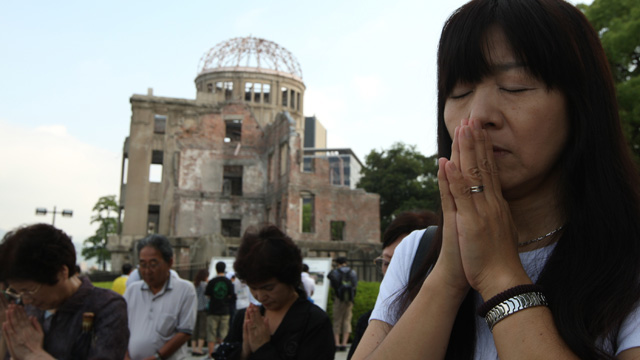
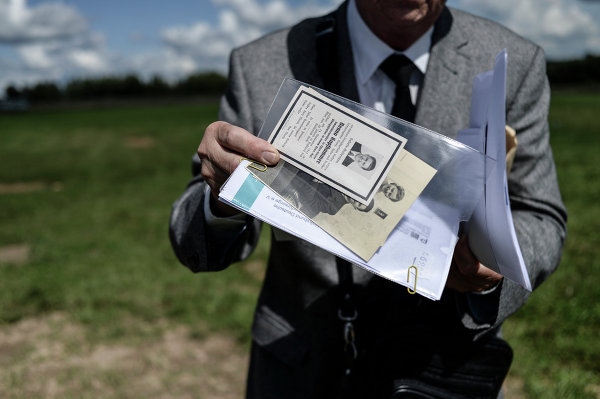
On a hiking trail in Northern California some time ago, I did meet while she herself was hiking for some exercise, a German lady with whom I began speaking about what wonderful things were happening in FRG - capitol moving to Berlin after reunification, economic reclamation and stabilization, etc., of the former communist areas and their influences, and the like.  In what she told me, in fact that this had been foreseen for years by the intelligentsia in Germany, and that the world had made that country wait in catching up to any relief of the memories from two world wars in addition to the role of Eastern Germany in the Cold War and more.  There was a topic that came up and inadvertently one of us mentioned the dismal conditions and privations of the Eastern Front in WWII and how many German boys had essentially gone through their training and then been cast into that abyss from which they did not return.  Many of them.  In fact, if my reading on the subject serves me correctly, assignment to the Eastern Front, even if one were a ranking officer was a death knell for many young Germans at the time.  See linked articles below.

In his "Lettre à un ami  allemand," the great critical thinker at the time, Albert Camus, opened the destructive and cataclysmic topic that is touched upon above as a question.  In fact, what was the mindset that drove the German soldier, in fact the man in the street in places like Munich and Bonn, and other places in Central Europe, to give power to the attitude that the only solution to communist and leftist influences in Europe, Jewish question aside, was conquest and subjugation.  This has been a topic examined, in the way the German military is understood to have worked and acted, as a kind of collective psychosis - "understanding" the German leadership a the time and so forth - though this does not, in fact it barely fills the vessel of knowledge and other facts and details to know and comprehend the enormity and importance of the European influence at the time and who had or has the most important role in it.  The question asked by Camus in his essay that is critical to anyone examining the topic of the WWII Eastern Front, and that might have application even today insofar as historical examination of the time is concerned, was in what way did the German leadership at the time not believe and thereby take up arms against the communists / Marxists in Eastern Europe, that there was no single, peaceful solution to letting that geographical area and its peoples continue what reportedly and observably had been and promised to be a mistaken experiment in politics, administration, social policy and ethics, etc., by many people worse in their edicts and totalitarian practices than any hitlerian model. 

There is no doubt that many admirable communist military personnel from the U.S.S.R., themselves good and ethical people, brave and valiant, went West to fight the Germans and themselves and did not return - again the number of mortalities exceeds the ability of one person to count them, though on a different scale, the number of German deaths informs; and their work to respect, recuperate and put their dead to rest; the international community of the greater wounds suffered by FRG in Eastern Europe and that society's continued efforts to address the implications of the related military conflict in public discussion over the years.  In the overall examination of areas like the Eastern Front, in the thought of it all the way through to battle planning and execution on both sides, one "understands" the mystery about why the German leadership at the time placed such great emphasis, even political quackery, on what it believed to be the responsibilities of the time.  Though many observers of what happened in Eastern Europe in the 20th century, and scholars, etc., do look at how and why the way Germany addressed this as an entirety from a moral and psychological standpoint, and from the standpoint again that German leadership was deeply flawed, there are probably a set of more thoughtful reasons that are the answer to the unknowns provoked by moral, ethical and other issues and explanations about it.  Due to the overall interest in things like the Germans recovering their war dead, and how the soviets worked to discourage this, even to deface the idea of it because they at the same time gravely feared and loathed any respect German had nor has in the world; and the former soviets as well, there begins a process to answer the mystery and questions about the times in which Germans gave their lives in places like the Eastern Front.  This not because they did so willingly and with politically - charged ideas, but because and out of a sense of obligation, perhaps even overriding economic, social and  financial obligations as offered and predicted by the immediate future at the time.  The soviets were equally zealous and messianic, if not more so, and there were greatly more of them.

The soviet cemeteries that I have seen in Eastern Europe are quite plain with headstones and

monuments, and other markings of the past conflicts there and the related mortalities.  From the images of the new German cemeteries and the looks of them, the German ones are even more inauspicious and understated.  For at least some individuals, people need to continue to know what happened in places like Smolensk and related and similar places of the time, and not only the political and other ramifications of this, and of the value of respecting and recovering the human element that might one day be relegated or forgotten, and the meaning and responsibilities that go with this equally passing.  In view of what happened at the Eastern Front at the time, part of the sinister and criminal vice of the soviets, was to disallow and to deface and erase even the thought of Germans having any connection to communist soil.  That this has been redressed now shows at least at this time, and as the result of things like the effectiveness of Perestroika, renewed and popularly discussed and understood efforts of everyone to comprehend the places of Europe and Eastern Europe and their influences in the world in order to avoid the loss of life in the future that took place there.  Regrets for any typographical or stylistic errors in this writing.

"History" channel internet article.

Article from "Der Spiegel" online.

Online article from "RIA Novosti."

Sunday, July 28, 2013

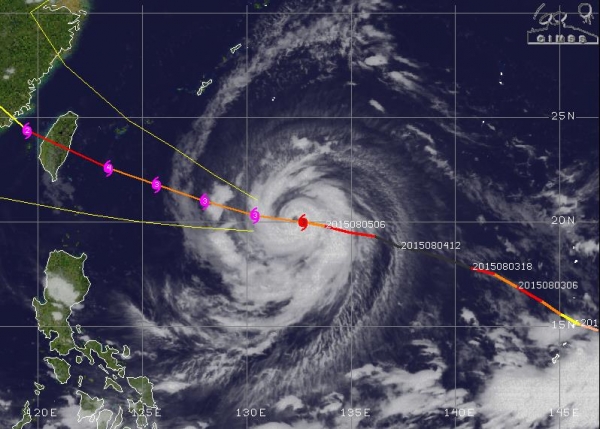
"Bad" storm on T'ai wan (almost right in T'ai bei City.)

Media Photo
The thing about typhoons is they're apparently the scariest, noisiest, most destructive weather patterns around.  We don't really worry about them in the U.S. because we do not really have them here.  See satellite photos on the web and the following stories (that are important in terms of the great damage recorded, but in America that are on the inside pages of the paper,) that are not really headlines in the U.S.:
 
                                             - BBC News.
                                             - U.S.A. Today.
                                             - Deutshe Welle.
                                             - Voice of America / Asia, and - Bloomberg News.
 
Media Photo

Le nouveau roi de Belgique.

Media Photo
It is not often that one sees a coronation different in character (though similar in spirit, even in view of a language barrier) than the U.K. royal investitures, but the new Belgian king Philip’s coronation this past week was quite understated and modest, and featured an excellent cast of international actors and their laudatory words, including especially those of Albert II, the outgoing (retiring) Belgian monarch who quite nicely stated his expectation for the good conduct of the monarchy for the long – term, provided it featured people like the incoming royal couple.  Belgian royalty does not have it easy as it rules in a country where the warring states in Europe in the past century found lots of loopholes and fought bitter, pitched battles there.  It is also true with respect to this, and again, not easy for any Belgian to stomach, much less the royalty there, that everyone came to the help of the country in time of conflict.  This is quite a good example of the rear – view mirror view on things that many political pundits express, and the background and actual, non – revisionist story of how Belgium was overrun in two wars is quite complex (See above all “The Fateful Alliance” by George Kennan.)
 
The coronation story was not overwhelmingly noticed even by the French, but you might see the articles below for more precious and immediate details than I am able to give here:
 
                                                    - Reuters (via Yahoo!).
                                                    - Yahoo! (Reuters).
                                                    - UPI.
                                                    - Reuters U.K.
                                                    - Chinese News.
 
Media photo
 

Wednesday, July 17, 2013

Histoire de nouveau de Bohème (dès 2003.) - Tartuffe en débarras - exemple du communisme défunt.

Photo Média
Toujours, ayant remporté ce livre depuis les rayons dans la localité, à la fois se trouvant dans les environs de Milan Kundera, nous nous enfonçons dans les détails abstraits surtout des arts touchants à tous les aspects de nos vies de tous les jours.  Typiquement, au début de son roman, on se souvient des paroles entre le compositeur Schönberg et un journaliste il y a beaucoup d’années qui faisait prononcer une question devant l’artiste sur la possibilité des forces créatrices dans l’artiste ayant été éteints par le processus de l’émigration pendant ce temps aux EE.UU.  Ceci illustre les qualités et complexités de l’écrit littéraire de Kundera en français et provoque son analyse encore du siècle saignant du XXème – la Guerre d’Espagne en 1936, les deux Grandes Guerres, l’invasion Hongrois en 1956, la réaction des Yougoslaves en 1948 contre Staline – et les résultats de l’effondrement communiste en 1989 – 91.  Le communisme en effet dans quelques esprits fût un mouvement contre les personnalités fascistes du siècle et leurs amis.  Avec ce fondement, le roman « L’Ignorance » commence son déroulement avec Irena, praguoise (Prague, peut – être une ville inconnue ou en cachette, guettant, sadique, gênante, typiquement communiste et pas usuel selon l’Occident), qui allait émigrer en France à Paris (tellement un rêve en vue de toutes ses difficultés et obstacles de son existence.)  
 
Le communisme était anathème à l’émigration volontaire, et cela parmi d’autres thèmes du déroulement romancier de Kundera sont trouvés dans tous ses textes.  Le mari d’Irena, Martin, est mort ; elle a d’enfants, ses habitudes et comportements, le bon humeur, mais ne s’arrange guère à Prague.  Dès 1989 à Roissy, elle rencontre Josef en sécurité.  Un homme convenable néanmoins une façon de vivre et situation soupçonneuses.  Une fois avec Gustaf, nous subissons non aux images de Le Clézio typiques, mais pratiques et vrais à la vie selon Irena, une femme mûre et chou pour son rencontre, un agent de l’aéroport de Paris.  Il soit à la fois égoïste, indiscret, capable d’aventures, bohème comme elle, libertin, solitaire, quoiqu’insolite.  A partir de son mari Martin, et l’agent de sécurité Josef, elle suivit d’autres voies avec leurs propres histoires provoquant des rappels et souvenirs des tanks russes à Prague en 1968.  Au court, et selon Kundera de l’intérieur de l’Europe de l’Est, le communisme surtout fût un gros gaspillage du temps, de l’énergie et matériel et ressources, derrière dans la brume des mémoires des peuples, au passé (ici employant les mots Kundera), invitant en plein ennui la nausée et l’irritation des peuples, surtout des Tchèques dans leurs efforts à complètement oublier les Russes et la Russie.  La  vie sous le communisme était au – dessus de tout impossible pour les filles et les femmes, toujours vivants les vies très peu assurées et dont les raisons ne sont jamais admises ni mentionnées.  Irena, après Josef trouve Gustaf, soi – même une vie très peu assurée, disant peu de paroles sauf les mots clefs et importants, et il a l’embarras devant les grands yeux d’Irena tout le temps ils sont ensembles.  La boîte de Gustaf est à Prague et l’aventure s’ensuit pendant les efforts tenants d’Irena à émigrer en France à Paris.  Elle suivit une fois ses compatriotes en hiver en séjour à la montagne et tombe malheureusement et par hasard gelée, aboutissant à l’hôpital où l’on a dû couper une oreille.  Les femmes, toujours héros chez Kundera, de remords subissent habituellement à ces choses dans ses textes. 
 
De façon typique, encore chez Kundera, un lien biographique s’apparaît dans les interstices du texte – celle de Jonas Hallgrimsson, un personnage Islandais ; et après trop consenti pour sortir de son pays apparemment, elle revoit Josef qui ne se souvient guère d’elle.  Irena apprend de la mort de la femme de Josef sans notion ni matérielle ni temporelle ; ce qui présenta des problèmes à la mémoire de la vie de cette femme malgré la fin de certaines difficultés pour Josef.  Josef soi – même est ensuite le sauveur d’Irena qui subit des difficultés elle – même dès le décès de Martin.  Tout revient à la musique de Schönberg, une commémoration significative et permise en public de l’écroulement du communisme.  Le couple fait une fête avec une bouteille du vin bordelais, et l’alcool est devenu un thème de leurs relations en même temps que la vie somnolent des rêves confus de la fin de l’Östpolitik.  Une fois leurs relations rompues, une fois Josef est le revenu à démontrer et mettre en relief l’dée de l’amour au – dessus de tout, néanmoins le rôle y trouvé de l’alcool.  Le valse final du roman se trouve lors une narration d’un coup sexuel pour le couple ; banal et naturel, dans la chambre de Gustaf où le lendemain il l’abandonne de façon typique pour un homme de son âge – elle continua le sommeil dans son lit au moment de son départ pour l’avion à Roissy aéroport.  Qu’il filait à l’avion et qu’elle dormait parallèlement dans son lit, dans sa chambre, indique une façon de vivre à Paris.  Vous savez ce – que c’est? 
 

Friday, July 5, 2013

Incompréhensible: les maquis contre les tanks en Syrie.

Voyez, si l'on veut, en - dessous, les articles et images sur la tyrannie, la racaille inouïe, ... .


Technique des maquis - çela on fait contre la tyrannie (Photo Média)
El - Assad aime son peuple et sa patrie, que (Photo Média)


Cliquez ici pour actualités (également importantes) Yahoo.


... another coup.

Media Photo
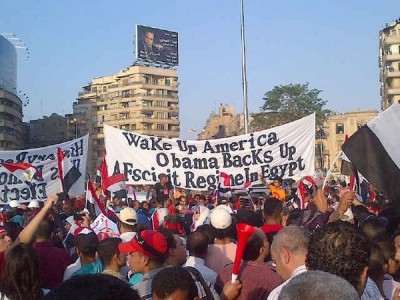
Despite what appears to be the installation of a new government in Egypt this past week, and change is supposed to be good these days, it is sad that the principles of an administration under the rule of civic, political and other rights, the rule of law and right to property are lost on the current power polity in that country in view of the kind of militarism with theocracy on its face that have presented themselves to the eyes of the world at present.  It is difficult to mention here what the hope of the Morsi regime actually has been in view of the gridlock he found himself in once appointed to office.  Political infighting had his political agenda to bring constitutional principles in practice to his region visibly stymied and in gridlock for some time, enough time for his political and other opponents to gather strength and stir polemics against him.  People like me know that Morsi wished to, among other things, build upon the idea of resolving the Palestinian and other anti – Israel questions within his country in view of a proverbial getting on with it, and it is obvious that in the type of revolutions he provoked that political forces in opposition to him were just as, if not even more powerful in their ability to have the populace rise up and in their capacity and ability to stir controversy within the country in giving him the boot, and then in replying to a call created by a power vacuum in seizing the political and administrative dais.
 
That the Morsi’s of the world in Arabia are more Western in their world view and political orientation is dangerous to powerful Arab interests, including those of petrol politics applying to the strategic control of various waterways and so forth, and who and how access to those things is paid for through Egyptian coffers.  Aspirants under these conditions want to have control over state coffers and the ability to tax the value of the “patrimoine” that’s in any way involved in the global money tree.  This not only included petrol politics, but tourism, education, various areas of international and even regional commerce and their economic elements as first monitored and then controlled by the state.  The idea that the U.S. Republican regime had under the president Reagan, that even the Carter regime in the late 1970’s shared was one of equalizing and helping to better organize Arab states without co – opting them at the same time.  The Arabs in typical fashion took this as a severe offense:  At the time this was part and parcel of the war in Lebanon and today has resulted in widespread unrest in places in Arabia where politics are in flux, especially in North Africa
where there is a history of power struggles and administrative, ministerial and bureaucratic jostling and infighting that is apparently the nature of the game at this point, just as it has been for years, often with those in the military wielding power in the end.  This has been the legacy of the abandonment by the Egyptian regime of the state – level fight to eliminate Israël and subsequent violent death of Anwar Sadat who championed this controversial strategy on the part of Islamic regimes.  Other politics, including those of hydrocarbons, have played a role in this spending of political currency through increasingly encouraging power grabbing in a country that is weak constitutionally and over – armed, and subject again and again to the fact that everyone who is anyone in the Arab world has connections to the fiercely anti – everything Hezbollah, the activism of which starts in the violent capitols of the Middle East, Beirut, Baghdad, and Kabul, and now Damascus and Cairo.  The influence of the old guard of the Hezbollah as a critically and powerfully divisive political force is not to be underestimated, nor is the power of same to secretly enlist everywhere those with sympathies lying in orthodox Islam and its current place in the world as promoting violence and terroristic tendencies and acts against the kind of pretentious elitism that is approved of and promoted in places like Iran at this point.  Forget that such places are geographical at this point and delve for yourself simply into the ideas that the leadership in such countries wishes its territory to represent a nihilistic and destructive idea or set of ideas without regard to territory.  Such is an obvious and evident detail as to the intent of those seizing power in Egypt at this point as influenced by divine clerics in the Middle East and elsewhere in the kind of ruthless and destructive “us and them” endgame that is influenced by public Islamic dogma at this point.  This begs the question about there being even a slight hope that Morsi and his people remaining alive at this point into the future.  Trial announcements and so forth emit for people like me the overall public cynicism and tyrannical attitude of the leaders of the present Egypt coup in the face of reasonableness, skepticism and the more complicated character of what democracy can be, even in the beginning, and its call for people to actually use their heads under the present political conditions in the region. 

Controversial "New York Times" article.

Monday, June 17, 2013

NSA supposed / alleged snooping on everybody in the country (heavens to betsy).

Media Photo
STOP MESSING WITH THE TELEPHONE?  While I do not really know, as such things as the latest news about N.S.A. “metadata” and “PRISM” activities could just be a test of secrecy and discussing the ‘rightness’ or ‘wrongness’ of this is moot.  Also, and with respect to any visceral reaction by anyone who talks over the phone, most people who have a telephone or a cellphone handset know the telephone company has the ability look at anyone’s telecommunications profile and call records at any time.  Such details are internal to telecommunications carriers and serve as a reference for things like demographics and marketing studies, system stress studies, customer service activities and the like.  For people like me, for the U.S. President even to have made this part of his agenda is not likely – he has to be too busy with other things.  Though snooping and mining into voluminous and numerous calling and other records with varying degrees of granularity and specificity is absolutely insidious in its intent and effect as far as civic, political, administrative, and other rights are concerned here in the U.S., it is undoubted that this makes any difference, even one iota of a smidgen of care, for most people as telecommunications customers.  It will be interesting if, or whether or not, our chief executive is found ever to be involved in such forms of monitoring of people’s behavior, but this is not likely:  Our president is a law professor at the nation’s best law school, big on issues like asserting and preserving individual and constitutional, and human rights, and that he is concerned with and orders and / or participates in the actual, purposeful and direct monitoring and recording of us talking over the phone is entirely doubtful to me.  That he ever gave direct permission for these sorts of things is doubtful as well, and the activities by N.S.A. under scrutiny at this point are to individuals such as myself a redundancy of ordinary corporate activities under different motivations and purposes (see above), perhaps, though centered on information – gathering and analysis that happens in any event due to things like systemic structure of our information systems, the nature and capabilities of high – level computing power, and solving the difficulties and other issues presented by communications today and the systems that host and operate them. 
 
See CBS News online coverage of this (click here.)