Either I did see an ages old special on
network television recently, or there is new interest among various
movie producers to film another “Star Wars” prequel or sequel.
This would be greatly exciting, not necessarily for the yuppie –
age Gene Roddenbury (sp?) fans, but for example, for my brothers'
kids who do enjoy and have like the past LucasFilm productions
featuring the famed conflict between the space Empire and the Luke
Skywalker crowd. I might be completely off – base here, but it
could be one might re – assemble the older cast, including R2,
etc., Chewbakka (sp?), Jabba the Hutt (sp?), the armies and bounty
hunters, shadows and ghosts of Darth Vader and the chief Emperor in
some huge cataclysmic, highly memorable movie that would, as Lucas
notoriously does, have the forces of good getting all the women and
limping across the finish line. Forget Ivan Reitmann for a minute,
and just image Yoda, image here, and crowd entering into the space
“Valhalla” after some very brilliant, well orchestrated, again
space rout of the bad guys. Remember the Yodas of the world never
have a chance against the lighting – strike forces of evil as
commanded by the Vaders and chief emperor types through their ultra –
multi computerized spacecraft that turn out as cream puffs when the
real battling happens. This would be impressive for everybody in
making a statement through the media without any political or other –
worldly charged language or imagery, not even the biblical
proportions sometimes ascribed to such things (no “Ben Hur”, or
“Ten Commandments” promised – land thematics or anything;) it
would be great! Get Lucas and his crowd again back to the core
competency and highly idea – oriented, technical and intellectual
work they have done for so long – putting greatly hopeful images
and dialogue / discussion in the public forum. They could use Pixar
again, too. This would be a great exercise in success for the old
film – making team, including Lucas himself, and more movie and
media awards awaiting, and this without any controlled substances or
anything else – just clean fun. Comments invited (especially from
your kids.)
Wednesday, December 18, 2013
Wednesday, December 11, 2013
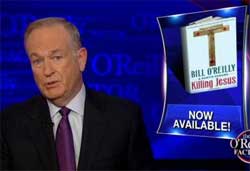
By Bill O'Reilly (Henry Holt & Company, 2013:) - Book Review.
![]() |
| Media Photo |
In his well – researched text on the Christ story entitled Killing Jesus, Bill O’Reilly takes a humanistic and multi – disciplinary approach to this story and its details and plot, characters and principal actors. His investigative work and story – telling re – visit the integral parts of this Christian legend, and pages are filled with a rich and detailed portrayal of different features of the New Testaments’ telling of this remarkable life. Turning points and main features of the book include a depiction in detail, and this text of almost 250 pages is longer than any of the New Testament gospels, of the ideas and different informative topics about this pivotal story in Christianity and the Catholic faith, and even in Judaism for that matter - including the virgin birth, the flight into Egypt, the scene with the Christ child in the Temple with his elders, his meeting with and baptism story involving John the Baptist; the gathering of the Apostles with Christ as their spiritual and ideological leader, the emphasis upon Jesus as a humanistic and human character versus a literal miracle – worker. The story also takes into account the scenes between Christ and the Pharisees, money changers, and others at or near the Jerusalem Temple, The Sermon on the Mount, the politics of the day as ruled by the corrupt and overriding Roman regime involving various characters such as Antipas, Pilate, and the Herod kings. The story O’Reilly re – tells of the Passion and Crucifixion – essentially the stations of the cross, is a colourful and enticing narrative including the legend of Christ’s tomb and the post – mortem Pentecostal time when the Lord appeared among his disciples and apostles. This invites us to investigate for ourselves the personal meaning of this cosmological view of a charismatic and political figure from the ancient world.
None of these sub – plots are told or narrated as strictly from the standpoint of one, single gospel of the Bible’s New Testament, and O’Reilly allows for the rites, symbols, mysteries and their meanings to flow through to the reader on one’s own, personal level. These details form the overall outstanding and highlighted thematics that give a very personal impression for the reader of the mysteries of modern Christianity itself that allow for the cohesion, flow and different assertions of ideas in the text. From these literary currents as told through the author’s magnifying and examining literary lens, it is clear from the text that Christ was a complete natural, a greatly charismatic person regardless of whether or not one regarded or regards him as a spirit or a human prophet. As a figure in the ancient world, especially during the time of the Roman empire, and even today, he would have eschewed not the overall role of spiritual leadership, but by his nature again would have avoided the kind of window dressing and fluff that might accompany it. For this and other reasons, and the text implies as much, the followers of the Christ, Prince of Peace, Xavier, Son of God, the Nazarene, … , while not very numerous in the origins of what was at the time the new Catholic faith; the pattern of the fervor and contagion of the Christ story starting in the old times could not have been otherwise up to today with its massively populous following among people everywhere. This begs the question about what the authors of this text, O’Reilly and Dugard, would have to write about, briefly or at length, about the story of Saint Paul, for instance as it integrates into Catholicism from the Christ story itself and again the meaning these narratives have in the modern Catholic faith, in the doctrine and among the laiety. This review is after a reading and is not overall an endorsement nor rebuke of the ideas, themes, and topics, etc., discussed by the authors in the text. Overall an excellent book.
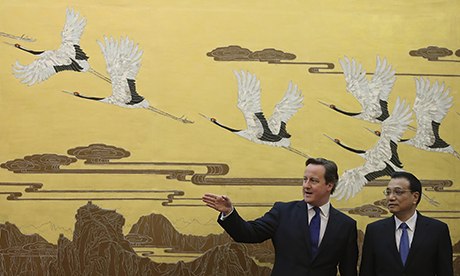
Avoiding Dialectic Revisionism - David Cameron in P.R.C. - December 2013.
![]() |
| From China News |
![]() |
| With Li Ke Qian - Media Photo |
AND => "Joe" - this is precious.
![]() |
| Media Photo |
Friday, November 29, 2013
More Promises for Tourism - Iran.
![]() |
| Media Photo |
It is not absolutely clear in my own view as the literature with respect to the NPT is varying in its approach to this issue, while quite vast, and one is obviously not at liberty to read all of it; probably a task for a very large team of people, even in places like Iran. There is, however, one powerful overriding them that materializes on a high level when a people even begins to desire nuclear power and then nuclear weapons, even if they are so - called defensive weaponry along former - soviet style terms: When nuclear weapons are on a country's political and scientific agenda, mutual assurance, a common - sense and practical view with respect to either wide - area or massively destructive weaponry, when forgotten as it apparently has been de - emphasized in the approach to Iran due to issues involving places like Israel, for example, and other Mediterranean countries like Turkey that could popularly be sympathetic to Iran, can become an overriding factor in replying to the offenses of those who have nuclear power, but who are non - signatories and who are non - compliant with NPT
![]() |
| Media Image |
BBC Story.
Mortar Shelling A Damascus Mission.
![]() |
| Media Photo |
Links to this story:
a. Reuters.
b. Xinhua.net.
c. News from the U.N.
d. Russian News (in English).
e. Fox News - Van Susteren.
Friday, November 15, 2013
1 : Universal Compassion.
![]() |
| Media Photo |
The author speaks of “attachment” in the text that concerns
the kind of identification, psychological, religious, moral and political,
etc., that people in the modern world must have in order to be fully engaged in
their lives among others. In short, the book makes the point the world is
a denser place and there are other people in it besides just the first person
singular for everyone: The text outlines the problems with what are today
inappropriate and aggressive, and over – aggressive self – assertion and self –
importance as a way to overcome the everyday challenges, and even extraordinary
challenges we sometimes face in our somewhat different, then again parallel,
paths through life. The change, but in integrating it into a peaceful,
secular framework as presented in this writing. The main theme of the
text is compassion in its essence as accompanied and made of alleviating the
suffering of others, and promoting the well – being of others. The
foundations of the spirit of universal compassion are thus the pursuit of a
kind of collective or societal happiness and contentment of the family of
civilizations in view of and derivative of efforts to lessen and properly
address the attention of the world public on suffering in order to end the
destructive forces that cause the negative effects of suffering in its various
milieus. The Dalai Lama speaks of karma under the circumstances as having
a relation to causality with respect to the multi – faceted events affecting in
various degrees the lives of writing emphasizes themes such as selfless
individuation and altruism, service to others in the name of happiness and the
pursuit of happiness, social justice, political freedoms, passive resistance to
aggression and tyranny, selfless (again) righteousness, and more in a way that
appeals to the majority of ideas about humanism, freedom, justice, and
morality, etc., in the mindset of anyone who believes in self – autonomy and
morality, be it from any of the main cultural centers we all know and read and
see in the media every day. The author as well tells the reader in a
chapter on “Discernment” that the openness and dedication to success in one’s
life and the lives of others in its effectiveness depends greatly on the sense
of autonomy in everyone, perhaps even appealing to the idea that such a quality
is innate and is then refined through life’s experiences without the real
possibility of being taught from previous times.
The outward compassion the Dalai Lama has in this text, a
holy book for Buddhists, for his fellow colleagues, associates, the extended
human family; and the awe, respect, and attachment not only to other people but
to the environment and to nature is remarkable in this writing and shows the
indomitable attitude of the Buddhist faith against destruction, negative
influences in society and among the greater family of humans everywhere.
In its influence as a cosmology book, the text ranges in content and
context, directly and indirectly from topics like interpersonal relations and
psychology, learning and morality, the sciences including the author’s
knowledge of the neurosciences, the social sciences including the more negative
and utilitarian subject matter of economics, the development of and role of
religion in modern life including the importance of genetics and human and
biological possibilities and differentiation, languages and other arts, world
and regional politics, the history of India, and other quite important topics
of discussion by everyone. Overall, the type of universal compassion
talked about in this text might not be at home, for example, with those whose
perspective dates no further back than the Middle Ages, but the text might
prove extremely valuable, again not only for Buddhists and the followers of the
Dalai Lama, but for anyone interested in the discussion of psychology,
religion, and life sciences and their roles vis – a – vis each other and more
in the modern era with its many influences and religions and secular mindsets
alike.
Saturday, November 2, 2013
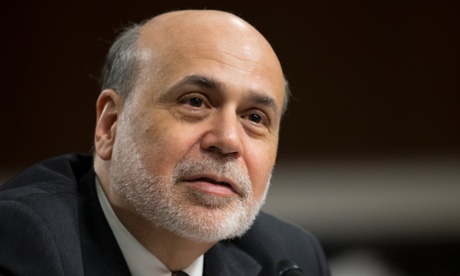
Benjamin Bernanke's Federal Reserve: 2005 - 2013.
![]() |
| Media Photo |
Benjamin Bernanke, at the time he inherited the job as Chairman of the U.S. Federal Reserve had more challenges ahead of him that any Fed. Chief in recent memory. His predecessor, Mr. Alan Greenspan, arrived at his Fed. Reserve Chairman appointment with a stellar resume from business and industry and had followed an empirical path through the economics and banking world to his job at the U.S. Federal Reserve starting on or about 1987 and ending in 2005 (eighteen years.) Bernanke was a change from Greenspan as a tough act to follow, and as the new Fed. Chairman confirmed in 2005 had a career in academia that dealt with the same level of statistical detail and analysis as his predecessor, though the emphasis of the Bernanke Federal Reserve was necessarily anti – inflation targets, troubled assets, interest rate targets, Quantitative Easing, and easing monetary policy among other things that have been his calling for the past seven or eight years. The Federal Reserve has many schools of capitalist economics just in the air and around its various personalities and public figures, of which a Keynsian framework that has had overall a great influence on economic modernism and to which Ben Bernanke has made substantive and substantial contributions including that of easy money and a methodological approach to and adaptive use and interpretation of economic information and statistics. This has been primarily due to Bernanke’s Chairmanship at the Fed calling for and integrating the features of faster rates of market economics change into its models and processes in view of simulating the overall surrounding economy as an modern and rapidly changing entirety.
Ben Bernanke who is apparently being replaced by Janet Yellen (who is herself apparently an inflation and quantitative hawk more in parallel with Greenspan than his successor Bernanke,) conducted a simultaneous “war on inflation”, overall efforts at price stability and crisis management given the effects of the internet bust and the housing constructions and mortgages bust during the 2000’s and more. He has been a consensus Fed. Reserve Chairman using pragmatic business tools, “gut instincts,” the usual computerized and arcane modeling in addition to the traditional economics models, encouraging different voices and opinions among the members of the Board of the Federal Reserve, and as a major emphasis of his tenure – better and more communication and transparency with respect to public availability of details, press, and information about the Fed from the beginning of his appointment in 2005. While following the policy path set in place by the current democratic administration in Washington, D.C. during 2005 – 2013, the Fed. Chairman was well versed enough in economics and business to know capitalism suffers more in its reputation from boom and bust cycles, that cannot really be controlled by central banks and other factors that call the Fed. to act in supporting business and commerce from the point of view of Washington, D.C., Wall Street and Main Street. Recently, this institutional conduct has continued with the adverse remembrances of the 1930’s Great Depression, the “lost years” – 1990’s – in Japan as a policy backdrop, and the related climate of the credit markets during both recent downturns and their effects that were so negative and uninviting to commerce, business and industry. Despite some of the work Bernanke’s Fed. carried out to cure some of the nation’s economic ills due to systemic weakness and delayed recovery, the typical self – regulating features of our economy, and the Chairman’s control over rates as well and probably due at least in part to the public trust and government insistence, Bernanke was not fully vested in his work as Fed. Chairmnan at first due to public criticism (even from Greenspan) and for some what was the integrations of labour economics and statistics and the further integration of bright – line employment and inflation targets. During the crises of his Fed. Reserve term, the Fed.'s Mandate of Employment and Inflation itself was almost as important as the general integrity of the financial system as centered in New York City. Whenever a decision was made during the Bernanke years, New York remained of important consideration, but places Like London, Berlin and Saint Petersburg and their economic considerations were looked at too in view of husbanding the U.S. public and private finances in the correct way and with the highest integrity. Bernanke believed in adjustments versus taking an overall (sometimes leviathan) problem – solving approach.
For the Federal Reserve at present, computing power has been developed and related real statistics and their processes of “synthesis” and interpretation that lead to internal reporting and policy decisions and implementation since the 1960’s and the technology the Fed has is part and parcel of high – tech development on the institutional level, centrally and regionally among the country’s twelve reserve banks scattered around the U.S. Bernanke followed a school of economic thought that includes strict governance with goals of growth and anti – inflation levels of unemployment. This type of economics is characterized by the results of economic stimuli with adjustments that are frequently called for to keep the U.S. economy growing if not functioning smoothly. This modern Keynsian – style oversight also integrates the proviso that deliberate stimulation of the economy and its frequently called – for adjustments can cause and result in as many problems and difficulties it promises to cure. A book about the Bernanke Fed. by Ethan Harris illustrates the “synthesis” approach after 2004 that prevailed to promote flexibility, draw on an eclectic series of economic theories and a consensus approach to internal discussions and decisions on monetary policy. This is a measure of the classical approach to economics in which, i.e., unemployment identities in the social sciences provide a set of “traffic laws” that show the potential and changes in demographics, for example. There are numerous such identities in the economics of labor and many have been used, the related analysis tools have names like NAIRU and Phillips Curve, all of which when used properly and when producing proper effects add to individual and business incomes, again as a rule. The book gives and illustrates a considerable discussion between Keynsian and Classical influences in economic doctrine and policy at the Fed. and that Bernanke came from academia into his job where mostly crises and the Classical view (as working theory and its ramifications) provided most grist for the mill for the FOMC and Chairman and Federal Reserve Board in addition to the regional governors around the country. The text (Harris, 2007) delves into great detail as to theoretical examination of both the Greenspan and Bernanke Fed regimes alike. Both are considered successful for various reasons, but Greenspan primarily for traversing some fifteen different crises and keeping the economy in the U.S. on a path of steady growth. Bernanke is credited with maintaining liquidity in the “Great Recession” with inflation targets, his policy use of labor economics, and his judicious and wise handling of various lending facilities during his eight – year tenure in holding inflation and prices stable and steady in time of chaos, even panic, and alarm in the markets in economic terms. The Harris text emphasizes the “new” rules of the macroeconomic game and Bernanke’s survivability and adaptability in making several key decisions about policy that enabled the U.S. economy to traverse the crises of 2007 – 08 and more. One also obtains from a good reading of the book a good notion of ordinary Federal Open Market Committee workings, especially the key indicators it might be using and about the meaning of its various communications with investors, the public, officials and other parties and stakeholders.
Thursday, October 31, 2013
A New Book from Mr. Alan Greenspan - A Continued Dialogue with Young People Everywhere.
![]() |
| Media photo |
a. His brief account of living in New York, his training and how he became involved in policy - making, industry, and banking, etc., as an economist and consultant, and then as an official.
b. The "New World" of economics and self - correcting character of the U.S. capitalist system; the nature of the challenges of the nebulous character of world commerce and economics today and its related changes vis - a - vis the past.
c. The end of the Cold War as a continuing salient issue in economics and its effects, including the 1998 Russian financial crisis, the currency crises in Asia during the late 1990's, and the movement of the national economy in PRC from a non - market economy to a managed one. One might also note the related effects of the end of the Cold War on developing countries everywhere. One also needs remember with respect to these the budgetary surplus in the U.S. at the time that was so un - characteristic of any federal regime here in years (since 1969,) and that in 1998 petroleum sold at one time as low as $ 11 per barrel. Note as well Wall Street considerations at that time, including the default and failure of Long Term Capital Management.
d. The keystones of "Clintonomics" as emphasizing competitive markets and the rule of law in addition to other themes including entrepreneurship and business optimism.
e. Recent history of the development and primacy of applied mathematics and statistics to the social sciences and their related acceptance and greater use in the various economics clubs of the world to which Mr. Greenspan belonged and belongs.
f. Continued importance, especially in view of concerns for global climate, of the study of efficiency, technology, environment friendliness and labor issues in heavy industry.
g. Recent history of interest rates and FOMC conduct.
h. NAFTA and other trade agreements with near countries, and trade agreements and the flux in economic and political relations with the great powers.
i. The arrival of the internet / world wide web and the invocation and an applicable interpretation of Schumpter's theories of "creative destruction."
j. The stock market boom during the 1990's and into the 2000's.
k. The overall and pervading mood of uncertainty in the "New World Economy" at present and dangers of inflation, the collapse of Social Security in the U.S., possibly the dangerous collapse of the social net in the U.S. in the future as a result of gaffes by officials, the promise of slower future economic growth and continued and more acute and unnecessary legalism and litigiousness of American society.
l. Increasing dangers of increased populism in American politics and policy - making and the dangers of current economic policies in inviting more deficit spending, inflation and currency devaluation.
m. The renewed importance of international financial centers such as London and others, and the necessity of nations to improve their employment situations and the country's social net.
In the details and in your reading of the 2007 Greenspan text, there is yet another world of topics, themes, items and issues to read of that affect your and everyone's finances and standard of living, employment situation and other features of living in the U.S. and what it means to be American. Mr. Greenspan probably reluctantly repeats some of this message in his new book as in the last one his voice might not have been heard in important spheres. The 2007 text as examining the topics above as well as other very urgent and important ones affecting urban and country settings in the U.S. right now, in background and actual perusal make excellent material for what must be his outstanding new book.
Another Way to Look at China's Growth Besides Just from "Retail."
![]() |
| Media photo |
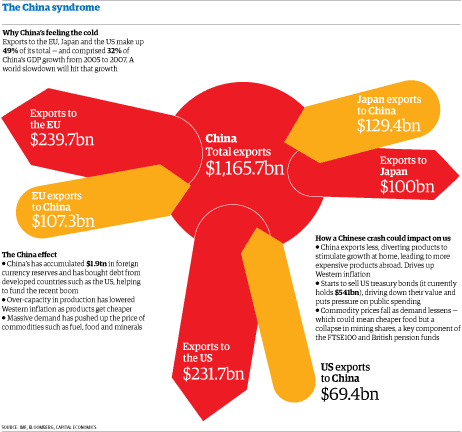
While it is obviously true P.R.C. produces a good amount of the world’s manufactured goods, and a good percentage overall of those are produced not only in P.R.C., but have a history of increasing importance in such places as Singapore, the Pacific island countries, Australia, Japan, T’ai wan, South Korea and the region of Southeast Asia and South Asia – the lot of them. But what makes P.R.C. so important in its own right, with still its relatively low standard of living outside the urban centers after all these years, as a producer and exporter of goods to the U.S. and Western Europe and other presumably wealthy parts of the world? While P.R.C. holds maybe a little over a trillion U.S. dollars in the bills, notes and bonds issued by the U.S., it also has a very large population, now much over the billion threshold as reached some time ago. This means P.R.C. indirectly has financed its economic scale and demographic scope through making the decision some time ago to develop major business and commercial ties with the U.S. – the post – Cold War unipolar superpower. Also, while for P.R.C. as a country from the Third World bounding over into the First World to the extent it fulfills its political and economic mission of transition from a country emphasizing industrialization and renewed centrism overall, there are a small number of major inputs that contribute to the future economic prospects of the country; not of the P.R.C. administration, but of the economic activity in the country apart from government, including continuing to invest at least some of its current account surplus (not all can do that), conducting more reasonable and goal – oriented what we would call open market operations, increasing the scope of the social net at home, especially for aging workers; getting beyond the fluff of places like Shang hai and Bei jing to manage better its intake of foreign direct investment, and then under the guise of what it calls “Chinese characteristics” and a newer doctrine of its administration under the “Represents”, carrying on the business of actively managing its industrial and commercial base, and then economy overall without the ordinary corruption and parasitism that characterizes some growing economies these days.
P.R.C. might indeed show a much greater percentage G.N.P. growth than, mention France at this point that might be one percent. The recent estimates of Chinese economists about the sustained growth over eight or nine percent gross of that country’s economy as a whole does take into account the reports and numbers that are submitted to the center, though it does not quantify the actual numbers of what must be the shadow economy in the country that might be yet another significant source of growth, however illicit, to again enrich those who are merchandising unofficial stoves, televisions, handbags, and other goods and contraband at this point. In the former soviet union, for example, during glasnost, the shadow economy might have been as great as forty percent of the Russian gross national product at that point, and this gives reason for much of the exclusive and private wealth the oligarchs concentrated to themselves at the time (Boris Yeltsin is criticized for having allowed this and even encouraged it though future studies will probably show this vicious process was a Russian version of hastening the arrival of capitalism in the country.) The grey economy in P.R.C. at this point might be greater than that in Russia in gross terms because in China right now there are more people who need things, especially the aging worker population, and who have ways of raising the cash out of their life’s savings and so forth to put into the consumer economy – this is and has been a source of unofficial and substantive internal commercial growth for their economy since the time of Deng Xiao ping, and the thinking behind it as it touched upon the issues of young people there could have touched off some of the issues of 1989 that resulted in the administrations reactionary measures at the time. Rest assured that China’s economy being the way it is, and with room to grow in the area of consumer and durable goods, the grey economy has given the country a somewhat easy and unofficial way to deliver on its economic promises internally over the years. Time will tell if this and related activities actually enriches anyone and by whom it will be easy to see who the responsible people are for it, be they resellers, middlemen, or some type of ‘oligarch’ as has arisen in their neighbor to the West.
While the Chinese over the years, not unlike the former U.S.S.R., have chased bad investments in the name of entrepreneurship that sometimes have caused financial and other reorganisations, it is possible that the current limits to growth as a macroeconomic issue will call for less official trade inside the country due to slack in world consumerism and in its financial markets as well. This will be a good thing for anyone who has a lousy economy and who’s lending things to finance growth, and it might be difficult for example, for France in the next few years to have G.N.P. growth that even equals its inflation rate; so France might want to return to the financial well in P.R.C. consistently as long as China continues to purchase its bonds and export goods there. Remember that debt is not property nor is it a proxy for property and those in the French “patrimoine” stand in line as stakeholders in any problem with its bonds before the debtholders do. The rights of debtors and bondholders when in dispute can get quite technical, though it is clear that no matter how much of France’s debt bought by the Chinese, France will always be free of any specious claims on its assets or national treasures due to the character of its own open market operations and its international rights as a debtor. Outside the P.R.C., international trade rules, and this despite the slackening of some trade at this point in recent reports, maintain the status quo as far as practices and the production of goods and services in exchange for moneys are concerned. P.R.C. might be greatly concerned by slackening trade as it’s a major producer of goods at this point, but trumpeting the day – to – day problems of this is a way of calling undue attention to oneself, and while there are ups and downs every day, one has to wonder at the same time what the daily figures are highlighted for unless there are some practices driving the trade and commerce from P.R.C. that are questionable. Ordinary economic systems, capitalism being one of them, have very wisely built in features to absorb the everyday chaos of the marketplace and those angered or upset by ordinary ups and downs might be judged to not being able to see beyond their noses. These days, so many merchants and traders everywhere are concerned with quick scoring due to an incorrect sensation that’s how money is made these days – by a kind of high – pressure cooker tactics – based business climate. This is only so true as ordinary people want a basic standard of living, to have a place on the food chain and the like – this is the same in every country with wise leaders or fools alike at the helm. The current concerns about China as an economic engine that’s slackening are frightful to “Chicken Little” and because most of the world has market – psychology – based trade these days (they count what’s in their pocket books at the end of the day and decide if they’ve fared well or poorly, etc.,) it’s important that daily and monthly indicators (markets and CPI aside, maybe) be given time to return to their general patterns.
Related Becker – Posner Blog postings on the subject.
Subscribe to:
Posts (Atom)