Some people might mention the Vice - President's voyage in P.R.C. is the result of efforts to clean up a real mess, or at least to do some "dusting off" of issues. Such trips as admininstrative and economic outreach only serve to outline the economic connivances of some of our eastern trading partners, not to mention the politics of it.
Wednesday, August 31, 2011


Monday, August 8, 2011
Sunday, August 7, 2011
Are things changing? Yes? (after a "wall street journal" editorial.)
The current democratic administration, insofar as the elections next year are capturing public attention at this point, has billed itself as one of thriving on change and the aspirations of the American public as a new kind of Americanism. Unfortunately, the president and his administration have as well incorporated into their presidency a deeply unpopular set of economic circumstances, and a set of unpopular and even more costly wars far away from home. These challenges in view of next year's contests do not reflect any of the policies around change of any of the previous most successful presidencies in recent memory, those of Reagan and Clinton. Mr. Obama as President of what is currently the unrivaled world power in the U.S., in his assuming the presidency, sought to change many executive policies, including carrying out what was said to be a re - distribution of any creation of economic or other values in commercial activities, and a re - casting of our political and military reach to a more defensive posture abroad. It is difficult to see how the President will be able to prevail in an election year when these two major themes of his time in office so far have met with limited success and are regarded by many as having been too "forward - looking" perhaps, too ambitious, and poor in their effort and execution. Such priorities in view of many voters have to be re - evaluated as to whether or not they actually fit into the portrait of what it is to be American and for what reason, including what the limits of these plans were and how they have darkened the political skies at home and, again, abroad. Instead of promoting a more affirmative and proud set of plans for his presidency, especially away from our shores, the President chose to rule in a kind of retreat from issues; something that does not fit with the American image or conduct in view of past defiance and taking challenges to the world, especially in times of economic stress and military conflict. Ronald Reagan rallied the country during his administration in pointing to the fractious and economically chaotic times of the 1970's and restored the place of our state to primacy on the basis of fewer taxes and a dissemination of American values everywhere.
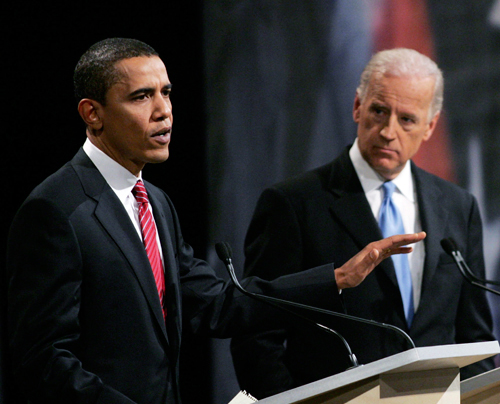
In many areas of endeavour, technical people have the overall reputation of being dour and contrarian, cynical and skeptical of everything, and the current President in the carrying - out of his election plans as pledged can be assessed as inherently and obviously so, especially about the present and future of our country, the U.S. This is perhaps because, at least in practice, the President has seized upon a relativistic and compromising set of ideas and rationales to promote his policies as having been and being successful as they are actually not so - something that takes away from the type of defiance and pride in view of the world's challenges that we as a nation - state need at this point. That the values of freedom and liberty are being put down in a number of states where they have recently arisen indicates the current presidency might not consider some of the people involved to be capable or responsible enough to have political freedoms and that they would otherwise regress again into tyrannies within their borders once the challenges of upheaval are over, even in the event the forces of freedom prevail there. For a president who is assisted by Mr. Biden and a number of others in Congress who are experienced in events and attitudes of foreign rulers abroad, this administration has not carried the day in its opportunities in the conflicts for freedom in the international world, and it does seem that officials under our chief executive either have the switch 'on' or 'off' in their perceptions about military issues overseas and in principle have the attitude that American is guilty of things in somewhat taking on the view of the central Islamic world. It seems the President's officials even want to scapegoat America in view of those who believe the 'Arab Spring,' for example, is an exercise in Zionism in their ideas not to assist in the rebellions against despotism in the Middle East, and in view of sporadic military resistance of the tyrannies to protests and rebellions that is apparently seen as dangerous to us.
The values of liberty, the uniqueness of the freedoms of our system, individualism and American specialness that have characterised and prevailed in previous times of challenge and conflict, especially during the 1980's, are lost on the current leadership that has a considerably shrunken world view of our country with an emphasis apparently on the creation of byzantine federal programs. Domestic and international realities, in the kind of inward, and stagnant vision the leadership has and that of American culpability, as sold through media image - making, the literature and through other channels, do not reflect the hopeful message and new starting points politically the president promised during the last election contest. It is entirely possible those marxists versed in the strengths of Chinese communism and Mao Tse toung thought, during the 1960's and 1970's, for instance, projected the same self - appointed image for American politics today in seeing a future of essentially caretaking and ineffectual western political regimes in view of the future upheavals in the world at this time, be they economic, ideological or military. It is apparently clear to the citizens of embattled cities, townships and regions, especially within the territories of the Middle East that the hopeful strategy of America has been flawed by an increasingly negative set of views and judgments about payoffs and benefits, revenues and costs, and other utilitarian measures with respect to what was set down by our forefathers in former times. That the preeminent world power in the U.S. has a leadership with these set of beliefs around calculation of political events and the risks of failure as it apparently has is a collective and several administrative and egregious wrong and needs immediate attention and redressment. It is also clear the questions around America's "peak" have been asked at Harvard and by its people for a long time, maybe (as a kind of hedge) for a hundred years, and the danger we face today is that such elitist and detached thinking, however dangerous and against the fiber of our state, might be wishful. This needs be examined in the next elections, and in all events resolved by voters in 2012.
Tuesday, July 26, 2011
Obama the budget "doctor."
Sir:
Your plans for the budget might indeed get through Congress later in the year, but the federal government and the country need more money. Everyone knows this, and no amount of legislation nor debate can obscure this difficulty.
Tuesday, July 19, 2011


Thursday, June 23, 2011
China's Management Revolution - "Spirit, Land, Energy." - by Charles Edouard Bouee
This text, while it proposes many ideas about how the P.R.C. has succeeded economically over the past thirty years, presumably by studying and adapting western methods to its own ends, does fall short of illustrating substantially any justification about how the free market can be reconciled with a state - run culture and country run by party rules. It also proposes China was substantially unscathed by the latest financial crises; something probably meant to be read by people who are uninformed. The book begins by questioning, in view of the monolithic success of P.R.C. and its command / free market model economy with communism in its foundation and background, what the survivability of the "American" model laissez - faire capitalism in a political environment of liberal democracy could be in view of the newer influences of economic disciplines and public, and political (civic and civil) restrictions such as are now prevalent in P.R.C.
The background of the current economic climes in P.R.C. is illustrated as having its origin in the time of Deng Xiao - ping ("three times up an down") whence the western leaning of many elements in the system of the P.R.C., and principally the return of Hong Kong to China in 1997. Deng was made famous, among other things, by stating "I do not care about the color of the cat, as long as he catches mice!" This imparts the value in current Chinese culture that using utilitarian methods to accomplish commercial goals is a major solution to accomplishments in worldwide competition. The text goes through the various corporate reforms under Deng, including the creation of Special Economic Zones, State and Collectively Owned Enterprises (SOE's and COE's,) and Township and Village Enterprises (TVE's) among others. Said corporate entities were created in order: i. To increase worker productivity, and ii. To attract foreign direct investment, the money of which, incidentally, is probably completely gone at this point. The book also illustrates typical hyper - successful Chinese entrepreneurs within China: Ye Mao zhong, Jian Xi pei, Guo Zhen xi, Zhang Yong, Yuan Ya fei, Feng Jun, Luyang Jiang, Zhong Qing hou, Zhou Hong ji, Zhang Lau and others. These are exclusive of Chinese outside China like the very well - to - do Steven Chen, Jerry Yang, and Andrea Jung (all the business people the author cites are men,) and no mention is made of the overseas Chinese being much more successful financially than their mainland counterparts.
The overall successes economically and socially, and the influence of Chinese society (again) are illustrated as the result of and "environment of evolutionary adaptedness" (Deng) as exemplified in the Bei jing Olympics in 2008 and the latest economics statistics. The business methods in P.R.C. are also presented in the text as currently distancing themselves from strictly utilitarian values to turn their attention to social and commercial / economic inequality, widespread poor business practices, corruption, pollution (especially of the mainland aquifers) and other difficulties that high - level management has currently pledged itself to remedy. The following topics are examined as well and a chapter is dedicated to each: a. "Spirit" - the knowledge of the Ancients and popular culture as applied to current society; b. "Land" - the Chinese approach to territorial geopolitics as administered by the party leadership and the military; c. "Energy" - as illustrated from the hegemonic Mercantilist tradition and capitalism as the game of commercial activities including party leadership, alertness, opportunism, and application of ancient ideas (Daoism, Confucianism, Legalism, and doctrines of Sun Tzu and the like.) Chinese management is illustrated in the end as being autocratic with many redeeming features, of which the characteristics of adaptation, reciprocity, consensus, ...
The author goes so far as to cite and compare Chinese methods with the theories and practices of Frederick Taylor's management style, and the same with those of Alfred Chandler, Ronald Coase and Oliver Williamson as a continuum of ideas leading to Chinese principles at present. Only a few paragraphs are committed to this conclusive prose and the validity of this type of continuity is doubtful and in the reviewer's opinion the current Chinese methods are industrial and technological, scientific and cultural, even agricultural in nature, in the older, twentieth - century sense, without consideration to or any focus on the actual benefit of such business methods and activities in a world of more advanced doctrines and principles, that is the present basis for their corporate forms of business.
THS
Thursday, June 16, 2011


Subscribe to:
Posts (Atom)