... and his precursor, Alan Shephard (May 5, 1961.) Please pardon the links, and no matter your expertise, do NOT do this at home.
Monday, February 20, 2012


Sunday, February 12, 2012
Anita Hill (speaks again.)
 |
| Media Photo |
Ms. Hill was originally put under the national spotlight during the Justice Thomas confirmation hearings. While Justice Thomas has proven to be in the public eye quite a good justice, Ms. Hill has chosen to have a profile that is less public than she might otherwise have while taking academic jobs in U.S. Eastern schools. I listened to a replay in California today of her recent public interview meeting with Robert Reich of the University of California and author of many books and articles geared to readers in the business world. Ms. Hill has many revolutionary ideas despite her apparently more moderate background, training, and education. She expressed in the interview, among other points, her ideas about equality and gender, and other rights issues with a kind of "go out and get it" philosophy. One should try to listen to these types of interviews as they give a perspective on the wisdom of our system in giving everyone a voice after some ups and downs, again for everybody. Ms. Hill and Justice Thomas, in the view of people like me, were some time ago locked into a vicious mutual antagonism probably due the mistakes and missteps of other people around them who were climbing a career ladder, arrivistes, yahoos, and so forth. That the Thomas hearings were as they were created issues for everyone in the related communities that make one want to question the morality of public hearings and the power of same to wreak havoc, probably just due to public curiosity and the need for a story, in the lives of those attending to them.
Sunday, February 5, 2012
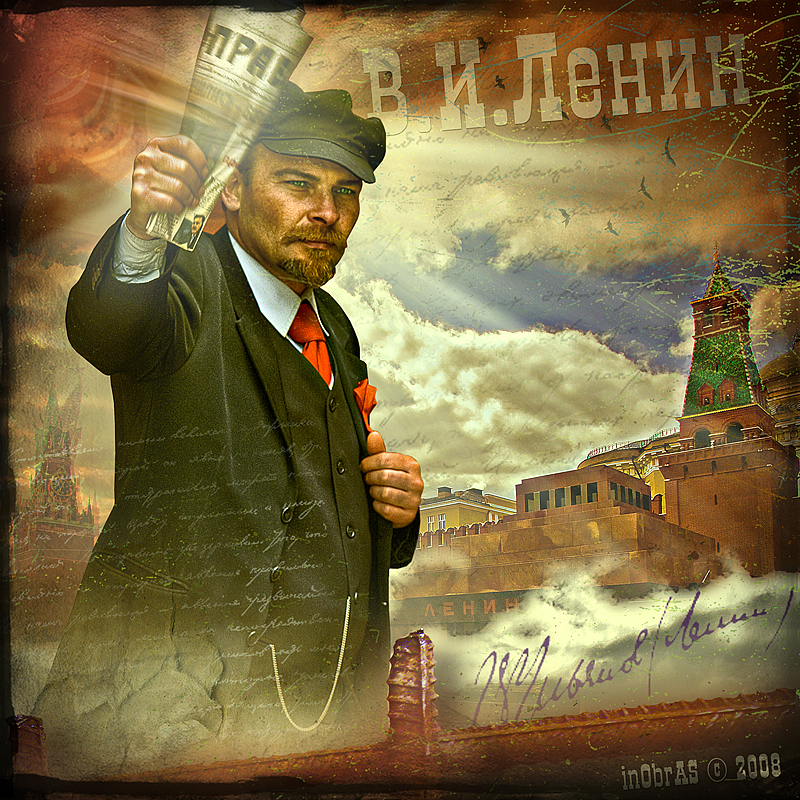
... as if (a twenty - foot tall) Lenin - Book Review.
On Conspirator (Rappaport, Basic Books, 2010.)
There are many good books, including this one, published about Vladimir Ilyich Ulyanov (Lenin,) and his spouse who survived him by years (Nadezhda Konstantinova Krupskaya,) though most of them examine his entire life starting with childhood through his passing in after the Russian Civil War. This text by Helen Rappaport gives a portraiture of only his pre - revolutionary resume as a brother of Aleksandr who conspired against the Tsar and was executed, up through his re - entering Russia as allowed by the Germans to pass through Switzerland and other territories. Almost in parallel with the death of Aleksandr was Lenin's time as a student at university in Kazan and where he was involved in student demonstrations that got him expelled from law school. The deaths of Aleksandr, his father and sister, all happening within a short time of each other, and with his exodus from university, Lenin started to travel abroad. It is important to note the text illustrates prominently his provincial location within old Russia at this point (1888 or so) and his life of intrigue and growing influence that began in rural Russia, his ideas about travel abroad and its educational qualities, his meetings with Swiss communists, and other pursuits including his study of Karl Marx in exile that captivated generations of Russians. Saint Petersburg was a likely hotbed of leftist ideas against the Romanovs, not only due to the location of the opportunistic opposition within Russia, but the town was quite easily reachable in Russia from most European capitols. Of these, and outside his time in Siberia, Lenin resided or visited virtually all the important ones, especially Prague, London, Paris, Berlin, Geneva, Krakow, Brussels, and of these, he naturally liked Geneva where the communists abroad were led at the time by Georgi Plekhanov, another name to remember.
Lenin's greatest achievement apart from the leader of the worldwide communist movement, in life and in his passing, was the overall successful publication of underground literature, including the newspaper Iskra, or "The Spark," which made the authorities of the time very wary as the Okhrana deliberately intercepted this publication in the mails several times. Lenin worked feverishly on all publishing projects, much like some people work feverishly on the same sorts of material today. He might have lived longer had he been more patient with himself, though no one like me really shares that opinion. The drama of this time that Ms. Rappaport illustrates very well is the political gamesmanship of the communists as led by Lenin abroad and then at home that concentrated on literary propaganda, spying, organised criminal activities, and other communist party actions of the day that resulted in the ouster of the Tsar and his family, popular dissension against the Russian royals, and the vengeance against them that resulted in their deaths after a new government had come to power. Not all of this is examined comprehensively, nor is the actual importance of the war in revolutionary times; and the book ends with the story of the Lenin train leaving from Switzerland with its destination as the Russian capitol, a trip that took place within the sinister framework of the conquered German territory at the time. This book seemed important to me as it illustrated the frenetic character of the communist leadership in pre - revolutionary days, the overall purpose of communism on a multi - national scale as a foundation for political success, and as a movement affected by and perhaps determinative of the chaos in Eastern Europe early in the 20th century.
THS
Sunday, January 22, 2012
... [Hidden] Dragon (informally.)
Without respect to a single statistic, it is important to have the idea, if you are an informed person, that the development and proliferation of massively destructive arms is dangerous. Dangerous not only as far as the intended use of the weaponry and its proliferation (again,) but to the makers of such arms and the danger of retaliation. It is clear, in the nuclear arms developments in countries like Iran, the purpose of such things is primarily twofold: a. Such things serve to signify and determine the arrival and importance of nation - states like Iran on the international stage, and b. As a retaliatory threat against any attack on any area of Iranian influence in the Middle East.
No one has doubted for a long time that Iran is an important country and that even in the time of its recent revolution, as a country, it influenced politics and ideas in many areas, especially Islamic ideas, that have provoked major and salient debates and discussions for a long time, both among national leaders and men in the street. That Iran wishes, and this apparently, to assert its nuclear power and by that nuclear threat(s,) not only in the Middle East, but in prepondering fashion, as a bargaining chip to invite and extract tribute from other nations in its immediate vicinity and beyond does indeed lack some sense in what it might otherwise do to make friends and influence people. Many people, and this due to what came out in the debates among the so - called great powers in the 1980's, do understand the visceral fear Eastern culture has about western ideas and society approaching and then invading its regions, among other things. The argument of Iran in its tacit avoidance of speaking about this gives cause for suspicion about its motives in developing a massively destructive arms complex. The same is true of other states who are developing nuclear weapons as well.
The visceral fear about societal and cultural influences invading and corrupting Islamic culture are indicative of pre - nuclear age nationalism as applied to the modern world and its present and potential security risks without respect to not only what is (the international status quo, to use old language,) but what might be. A reasonable person, when examining things like the financial expense and energy, and other outputs necessary to the inputs of a nuclear arms complex, and the proportions of effort in a country such as Iran as used to develop such a complex and its capabilities resulting from deployment of such arms, probably will not agree that this state should have them. This level of analysis comes from a strict examination of the scope of developing and deploying such arms, maintaining them and so forth; and this against NPT and other rules that are widely accepted by the great powers. In fact, the strident call for such nuclear attributes in that country appear to be out - of - balance with any analysis of the allocation of its national assets, investments, income and / or capital.
Why is this so apparent? While people like me do not read nor watch Arabic or Farci broadcasts, nor do we read publications in these languages, the thing is there is a common and known premise upon which Iran carries out its policies as evidenced by news reports, mostly trusted in free countries, that country is doing the bidding of others who are fed up with western ideas about society and specifically about government (bicameral legislature, separation of powers, rule of law (constitutional, civil, and others,) equality and rights, freedom of travel and expression, and the list goes on,) and the approach of the great powers to a little country called Israel. This begs the question "How can an Islamist have any regard for Israel with its reform - minded and cosmopolitan people and ideas?" This question, and its variants and derivatives is an old, nationalist - type question that invites direct slurs and epithets on the part of people who are not prejudiced among their own, but they are thereby highly nationalist and belligerent, and the smaller the better the country with fewer people, the easier the target for this mindset - and this has been true on the part of Middle East neighbors for years. The implications of this question by association to Israel can be scaled upward to apply to more populous and important places, even entire regions whose applecarts are for the upset by Iranian nuclear, and other political ambitions. With respect to this, and with respect to Iranian influences and politics now in evidence everywhere, the post - nationalist question might be proposed as "What can we do [together] to make a new approach to nuclear proliferation in view of these nationalist ideas?"
That this could be accomplished, just proposing a new approach to nuclear arms in the Middle East and elsewhere with some acknowledgement of the belligerence that goes along with some forms of nationalism, might itself be a way to invite a response to end the currents of what people like me know to be overt racism in the area as a tabled or distinctly different avenue of discussion apart from the current linkage racism and nationalism have there. This, combined with a discussion about the visceral fears of being struck from outside, would serve to de - escalate at least some of the tensions that caused, for example, the 2006 war, continuing problems in Lebanon, and the useless formation of paramilitary brigades and other activities counter to peace in the area.
THS
No one has doubted for a long time that Iran is an important country and that even in the time of its recent revolution, as a country, it influenced politics and ideas in many areas, especially Islamic ideas, that have provoked major and salient debates and discussions for a long time, both among national leaders and men in the street. That Iran wishes, and this apparently, to assert its nuclear power and by that nuclear threat(s,) not only in the Middle East, but in prepondering fashion, as a bargaining chip to invite and extract tribute from other nations in its immediate vicinity and beyond does indeed lack some sense in what it might otherwise do to make friends and influence people. Many people, and this due to what came out in the debates among the so - called great powers in the 1980's, do understand the visceral fear Eastern culture has about western ideas and society approaching and then invading its regions, among other things. The argument of Iran in its tacit avoidance of speaking about this gives cause for suspicion about its motives in developing a massively destructive arms complex. The same is true of other states who are developing nuclear weapons as well.
The visceral fear about societal and cultural influences invading and corrupting Islamic culture are indicative of pre - nuclear age nationalism as applied to the modern world and its present and potential security risks without respect to not only what is (the international status quo, to use old language,) but what might be. A reasonable person, when examining things like the financial expense and energy, and other outputs necessary to the inputs of a nuclear arms complex, and the proportions of effort in a country such as Iran as used to develop such a complex and its capabilities resulting from deployment of such arms, probably will not agree that this state should have them. This level of analysis comes from a strict examination of the scope of developing and deploying such arms, maintaining them and so forth; and this against NPT and other rules that are widely accepted by the great powers. In fact, the strident call for such nuclear attributes in that country appear to be out - of - balance with any analysis of the allocation of its national assets, investments, income and / or capital.
Why is this so apparent? While people like me do not read nor watch Arabic or Farci broadcasts, nor do we read publications in these languages, the thing is there is a common and known premise upon which Iran carries out its policies as evidenced by news reports, mostly trusted in free countries, that country is doing the bidding of others who are fed up with western ideas about society and specifically about government (bicameral legislature, separation of powers, rule of law (constitutional, civil, and others,) equality and rights, freedom of travel and expression, and the list goes on,) and the approach of the great powers to a little country called Israel. This begs the question "How can an Islamist have any regard for Israel with its reform - minded and cosmopolitan people and ideas?" This question, and its variants and derivatives is an old, nationalist - type question that invites direct slurs and epithets on the part of people who are not prejudiced among their own, but they are thereby highly nationalist and belligerent, and the smaller the better the country with fewer people, the easier the target for this mindset - and this has been true on the part of Middle East neighbors for years. The implications of this question by association to Israel can be scaled upward to apply to more populous and important places, even entire regions whose applecarts are for the upset by Iranian nuclear, and other political ambitions. With respect to this, and with respect to Iranian influences and politics now in evidence everywhere, the post - nationalist question might be proposed as "What can we do [together] to make a new approach to nuclear proliferation in view of these nationalist ideas?"
That this could be accomplished, just proposing a new approach to nuclear arms in the Middle East and elsewhere with some acknowledgement of the belligerence that goes along with some forms of nationalism, might itself be a way to invite a response to end the currents of what people like me know to be overt racism in the area as a tabled or distinctly different avenue of discussion apart from the current linkage racism and nationalism have there. This, combined with a discussion about the visceral fears of being struck from outside, would serve to de - escalate at least some of the tensions that caused, for example, the 2006 war, continuing problems in Lebanon, and the useless formation of paramilitary brigades and other activities counter to peace in the area.
THS
Sunday, January 15, 2012

Friday, December 30, 2011
Perhaps not indefensible monetary policy, and the results of much hard work.
 |
| Media Photo |
How did the Federal Reserve come up with such an idea? It has in fact probably carrying out this "Twist" policy for years without the economic and statistical precision the Fed is using at this point as a fine - tuning measure to monetary policy. The recent actions as carried out by the "Twist" might also have a desired effect on the value of the dollar, lending more stability to this currency while others continue to claw and scrape away at it (Renminbi, Euro, Yen, and even the peso.) The current monetary policy designed to do a number of things to ameliorate economic conditions for all Americans shows the imaginative qualities of the Fed Chairman, Ben Bernanke and his chief economists and staff, in that it relieves somewhat the short - term stresses on the national economy in many areas, especially with respect to growth prospects and industrial operations as linked to economic indicators. That does not go to say health care, retail, construction, insurance and securities, aerospace, and other sectors are ignored in the Fed's current efforts to foster growth; these industries are relatively autonomous and do well depending upon overall and other business conditions. What this does mean is America might not fall into the same economic projects that other developed economies did in past years, chiefly during the 1980's and 1990's, where attempts at growth overall, again, were financed, and this led to other difficulties when business conditions did not improve. Investors and market makers now have choices as to the way to steer their economic concerns with more precision, and this might allow the U.S. economy to begin emerging again from the slack it has experienced of late.
THS
Tuesday, December 27, 2011
Definitely Not "Professional" Protestors - An Authentic Impression
 |
| Media Photo |
The nature of the protests in Moscow at this point, and in the foreign capitols is impressive as many Russians are seen to be apolitical, and however reluctantly, followers of the leaders of the current regime. The reasons for this are that Russia itself does appear to still be dealing with breaking from its leftist orientation during the 1900's, and the current regime does promise better economic and business development for the country as a way of dealing with this. These are just two simple reasons (promises) that allow for the populace to usher in the Putin regime in 2012. That even small protests have taken place, and in cities abroad, indicates the overall scepticism of Russians about 'Team Putin,' as well as the renewed emphasis in government apparently on the military and security services. The reaction of the crowds in Moscow and abroad are classic with respect to the apparent resented and reviled alchemy of the state to exercise dominion over its populace at home and abroad and its political promises among other things.
That there is question as to the legitimacy of results of recent elections gives rise to ordinary curiosity about related details and the methods of the various parties who benefited from the outcome of the elections. Usually, even in political regimes that are quite large, there is some acquiescence as to official looking into the election problems, and then some certification of results either way. The protests do not appear thus to have enough of an impact to warrant this, even to test the proposition of improprieties, and this is probably the result of the spontaneity of the gatherings and some lack of organisation and influence over the regime that ignores them apart from security issues. It is unfortunate the crowds are pointing out the unfulfilled promises of the post - Soviet era, and it is as well unfortunate there appears to be no direction in Russia today along the lines of more liberal reforms: The regime continues to favour a public emphasis on heavily profitable commercial activities, business influences as beholden to the state, and public policy, even confiscatory and intrusive as it can be, probably just as arbitrary as it was before the Yeltsin era. All these points bring up more politics and some of these are points of contention that will never be resolved, and because, and again anew, the regime has found fertile and profitable ground in fixed ideas and a preoccupation with constitutional decisiveness and a strict rule of law, centrism, the regional power and even arbitrary edicts of Moscow and its workings over all of the country.
One is far from the dictature of the proletariat here, it does seem, and there is nonetheless a 'United Russia' party line that dispenses with the efforts at forming a government of consensus or some coalition of parties and interests without regard to efforts to further centralise rule and pre - determine regional politics as secondary to those in Moscow. This is a kind of tradition in politics and administration in Russia and is important insofar as constitutional and other powers and rights of the people are concerned - especially insofar as it is allowed through public debate and resolution through the coming elections.
Monday, December 19, 2011
Another "In Memoriam."
 |
| Media photo |
Havel was an iconic personality with his arts background and mastery of the Czech voice for political and societal reform at the end of the Cold War. He was also probably for anyone a tremendous person to meet. Any looking into the conditions he lived under during his adulthood will confirm this. The world has truly lost a great personality and iconic character in view of freedom and social justice in the face of the bureaucratic and byzantium nightmare of communist influences and their regimes and the will to power of their leaders, officials, agents and secret agents everywhere. See the "Economist" article below.
Václav Havel, playwright and president
Dec 16th 2011
EARLY in 1989, your correspondent, newly arrived in communist Czechoslovakia, passed an empty building in the Podoli district of Prague. Someone had written in the grime inside the window: "Svoboda Havlovi" [Freedom for Havel]. It was an interesting moment. The jailed playwright (as we used to call him) was behind bars for hooliganism following an opposition demonstration. The authorities could jail individuals. But they had lost the will, or the capability, to police the inside of shop windows.
See the full article
http://www.economist.com/blogs/easternapproaches/2011/12/v%C3%A1clav-havel-memoriam
Visit http://www.economist.com for more global news, views, and analysis from The Economist.
Friday, December 16, 2011


![... [Hidden] Dragon (informally.)](http://www.sitesatlas.com/Maps/Maps/606.gif)

Subscribe to:
Posts (Atom)