The "La Liga," Fussball Bund, nor the Premier Leage is it, but tennis in this tour can be fun to spectate and the television coverage is good, too.
Thursday, October 13, 2011


Saturday, October 1, 2011
in the pursuit of software "heaven," and other adventures ...
If the beginning of a very large software company can be encapsulated in a reasonably lengthy book, Mr. Allen has done it. While it is obvious Mr. Allen is a great story - teller, and quite self - effacing with respect to himself in this text, it does somewhat appear his writing style is similar to that of Bill Gates' from other texts (you name the titles.) Despite this likeness of writing style, Mr. Allen takes the approach in his text that technical software knowledge and related business are what made Microsoft the company it is today instead of the way Mr. Gates portrays Microsoft as being pulled together and as having executives who were artful deal - makers, much as other small computer companies have been in the beginning since anyone can remember.
Most notable in the early - going of the plot of this text are Messrs. Allen and Gates as gifted school mates and their friendship that carried through to the college years when they made their plans for a business together. Both apparently were skilled programmers and knew as well about computer hardware in the day. Mr. Allen describes several seminal events in the growth of Microsoft as having depended upon engineers and other people in the provinces, including in locations like Albuquerque, New Mexico and various places in Washington state. Not only were Mr. Allen's stories about New Mexico interesting to read about, but as well were the arrangements Microsoft made early on with NCR and DEC - two viable computer companies at the time in a fiercely competitive market. That Microsoft had some practice before licensing its software for the P.C. in 1981 was due to these types of arrangements in the world of (competitive) hardware at that time.
People like Messrs. Allen and Gates became extremely well - known about the time people like me graduated from high - school studies, and at the time, due to computers and the increasing dominance of technology, more and more students dropped traditional studies to attend technology institutes and schools (probably chiefly as the result of the images of executives from Microsoft, and Apple, Sun and some other companies.) Around this, the dissemination of the invention of the GUI was extremely important for the computer world and made computing "easy" enough for most people to try to have a personal computer or computers. Mr. Allen also speaks in his text about Moore's Law, which originally proposed the speed of processors would double about every year; and then was changed to every two years - this brings to mind how memorably slow the old 4k and up computers were, and how many of them had their own systems, the fragmentation of operating systems and so forth, that made computers talking to each other very difficult. The adventure that Microsoft represented at this point was to standardize personal computer software, and later networking software, etc., and other applications in order that everyone from technical people and administrators to end - users could start talking the same tech. - language, regardless of the basis for the operating systems and applications, routines and so on.
Mr. Allen is unabashed in speaking about his personal life and belief system as integrated into things like modern computing, quantum physics, microworlds, biology and futurology. He also hints at why he purchased sports teams and their venues, and is still in that business. Mostly people like me know he wants to bring an industrial - strength message to anyone who hears about Microsoft that technology is imperfect, but it is a great equalizer, a great way to improve productivity, educate people, and allow many tech. - oriented people to have better lives. It appears the intention of the founders of his computer company had this in mind even when they began their adventures writing and trying to find the right code way back when.
Thursday, September 22, 2011
Monday, September 12, 2011
Not forgotten ... (September 11, 2001)
Though many years have passed since that fateful day for many of our countrymen in New York, and since the War on Terror began (now called the "Long War,") and the heavy expense our country has made to stop terrorism in all its forms, the realities of September 11, 2001 are still fresh in people's minds. A generation of youth in our country has been brought along in a social environment of anger and fear, anxiety and frustration at the workings of the world in which "suicide" bombings and related acts are commonplace. Though as well there was much fanfare at this anniversary, and much was made of visual and sound impressions on the audience of the afflicted and onlookers as well, the dead can not see nor hear, nor experience in any way the honourable commemoration of these tragedies, both individual and collective. That the great recession is related to this, and in the country many people finances are short, only adds to the acrimony and self - doubt in looking back and remembering this particular day.
Link - recordings of September 11, 2001 happenings.
Wednesday, August 31, 2011
Economic "Karate" Test - Did I Pass?
Some people might mention the Vice - President's voyage in P.R.C. is the result of efforts to clean up a real mess, or at least to do some "dusting off" of issues. Such trips as admininstrative and economic outreach only serve to outline the economic connivances of some of our eastern trading partners, not to mention the politics of it.
Monday, August 8, 2011
Sunday, August 7, 2011
Are things changing? Yes? (after a "wall street journal" editorial.)
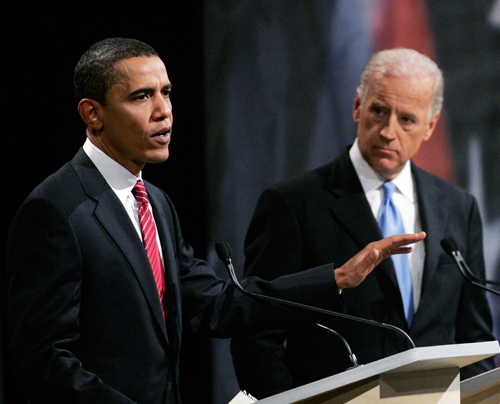
The current democratic administration, insofar as the elections next year are capturing public attention at this point, has billed itself as one of thriving on change and the aspirations of the American public as a new kind of Americanism. Unfortunately, the president and his administration have as well incorporated into their presidency a deeply unpopular set of economic circumstances, and a set of unpopular and even more costly wars far away from home. These challenges in view of next year's contests do not reflect any of the policies around change of any of the previous most successful presidencies in recent memory, those of Reagan and Clinton. Mr. Obama as President of what is currently the unrivaled world power in the U.S., in his assuming the presidency, sought to change many executive policies, including carrying out what was said to be a re - distribution of any creation of economic or other values in commercial activities, and a re - casting of our political and military reach to a more defensive posture abroad. It is difficult to see how the President will be able to prevail in an election year when these two major themes of his time in office so far have met with limited success and are regarded by many as having been too "forward - looking" perhaps, too ambitious, and poor in their effort and execution. Such priorities in view of many voters have to be re - evaluated as to whether or not they actually fit into the portrait of what it is to be American and for what reason, including what the limits of these plans were and how they have darkened the political skies at home and, again, abroad. Instead of promoting a more affirmative and proud set of plans for his presidency, especially away from our shores, the President chose to rule in a kind of retreat from issues; something that does not fit with the American image or conduct in view of past defiance and taking challenges to the world, especially in times of economic stress and military conflict. Ronald Reagan rallied the country during his administration in pointing to the fractious and economically chaotic times of the 1970's and restored the place of our state to primacy on the basis of fewer taxes and a dissemination of American values everywhere.
In many areas of endeavour, technical people have the overall reputation of being dour and contrarian, cynical and skeptical of everything, and the current President in the carrying - out of his election plans as pledged can be assessed as inherently and obviously so, especially about the present and future of our country, the U.S. This is perhaps because, at least in practice, the President has seized upon a relativistic and compromising set of ideas and rationales to promote his policies as having been and being successful as they are actually not so - something that takes away from the type of defiance and pride in view of the world's challenges that we as a nation - state need at this point. That the values of freedom and liberty are being put down in a number of states where they have recently arisen indicates the current presidency might not consider some of the people involved to be capable or responsible enough to have political freedoms and that they would otherwise regress again into tyrannies within their borders once the challenges of upheaval are over, even in the event the forces of freedom prevail there. For a president who is assisted by Mr. Biden and a number of others in Congress who are experienced in events and attitudes of foreign rulers abroad, this administration has not carried the day in its opportunities in the conflicts for freedom in the international world, and it does seem that officials under our chief executive either have the switch 'on' or 'off' in their perceptions about military issues overseas and in principle have the attitude that American is guilty of things in somewhat taking on the view of the central Islamic world. It seems the President's officials even want to scapegoat America in view of those who believe the 'Arab Spring,' for example, is an exercise in Zionism in their ideas not to assist in the rebellions against despotism in the Middle East, and in view of sporadic military resistance of the tyrannies to protests and rebellions that is apparently seen as dangerous to us.
The values of liberty, the uniqueness of the freedoms of our system, individualism and American specialness that have characterised and prevailed in previous times of challenge and conflict, especially during the 1980's, are lost on the current leadership that has a considerably shrunken world view of our country with an emphasis apparently on the creation of byzantine federal programs. Domestic and international realities, in the kind of inward, and stagnant vision the leadership has and that of American culpability, as sold through media image - making, the literature and through other channels, do not reflect the hopeful message and new starting points politically the president promised during the last election contest. It is entirely possible those marxists versed in the strengths of Chinese communism and Mao Tse toung thought, during the 1960's and 1970's, for instance, projected the same self - appointed image for American politics today in seeing a future of essentially caretaking and ineffectual western political regimes in view of the future upheavals in the world at this time, be they economic, ideological or military. It is apparently clear to the citizens of embattled cities, townships and regions, especially within the territories of the Middle East that the hopeful strategy of America has been flawed by an increasingly negative set of views and judgments about payoffs and benefits, revenues and costs, and other utilitarian measures with respect to what was set down by our forefathers in former times. That the preeminent world power in the U.S. has a leadership with these set of beliefs around calculation of political events and the risks of failure as it apparently has is a collective and several administrative and egregious wrong and needs immediate attention and redressment. It is also clear the questions around America's "peak" have been asked at Harvard and by its people for a long time, maybe (as a kind of hedge) for a hundred years, and the danger we face today is that such elitist and detached thinking, however dangerous and against the fiber of our state, might be wishful. This needs be examined in the next elections, and in all events resolved by voters in 2012.
Tuesday, July 26, 2011
Obama the budget "doctor."
Sir:
Your plans for the budget might indeed get through Congress later in the year, but the federal government and the country need more money. Everyone knows this, and no amount of legislation nor debate can obscure this difficulty.
Tuesday, July 19, 2011

Subscribe to:
Posts (Atom)